1. Executive Overview: The Paradigm Shift in Uninterruptible Power Supply Batteries
In modern mission-critical infrastructure—spanning hyperscale data centers, medical emergency centers, financial trading hubs, and semiconductor fabrication plants—electrical power continuity is not merely a operational requirement; it is a financial and strategic imperative. Uninterruptible Power Supply (UPS) systems act as the primary defense line against grid instability, transient voltage spikes, and unexpected power outages.
For decades, Valve-Regulated Lead-Acid (VRLA) batteries served as the legacy industry default. However, global procurement officers and infrastructure design engineers now face accelerating demands for higher power density, smaller footprints, non-propagating thermal safety, and lower operational carbon footprints. This shift has accelerated the transition toward advanced Uninterruptible Power Supply Batteries powered by Lithium Iron Phosphate (LiFePO4 / LFP)—specifically engineered with nanoscale cathode architectures.
Key Engineering Insight: High-rate UPS backup demands instant pulse power delivery (10C–30C discharge) within milliseconds of a grid drop. Traditional energy-dense lithium chemistries like NMC (Nickel Manganese Cobalt) carry higher risks of thermal runaway under elevated operating temperatures. MKI Energy Technology Co., Ltd.’s Nanophosphate® LFP chemistry solves this dilemma by delivering high discharge power alongside atomic-level chemical stability.
As enterprise facilities adopt AI computational clusters with unpredictable peak loads, power densities per rack have escalated from 5–10 kW to over 40–100 kW per cabinet. Legacy VRLA cabinets simply cannot meet these volumetric power demands without consuming prohibitive amounts of real estate and requiring frequent 3-to-5-year replacement cycles. Below is an authoritative technical benchmark comparison highlighting why global procurement leads are specifying MKI Energy LFP technology for enterprise UPS updates.
| Performance Metrics | Legacy VRLA (Lead-Acid) | Standard NMC Lithium | MKI Energy Nanophosphate® LFP |
|---|---|---|---|
| Gravimetric Energy Density | 35 - 50 Wh/kg | 180 - 240 Wh/kg | 140 - 160 Wh/kg (Optimized for High-Power) |
| 100% DOD Cycle Life (@ 25°C) | 200 - 500 cycles | 1,200 - 2,000 cycles | 4,000 - 10,000+ cycles |
| Thermal Runaway Initiation Temp | ~160°C (Gas Venting) | ~210°C (Exothermic Reaction) | >270°C (Inherent Structural Stability) |
| High C-Rate Capability (Pulse) | 1C - 3C max | 3C - 5C max | 10C Continuous / 20C - 30C Pulse |
| Calendar Service Life | 3 - 5 Years | 7 - 10 Years | 15 - 20+ Years |
| HVAC & Cooling Requirements | Strict 20°C–25°C control | Moderate cooling needed | Wide Temp Tolerance (-30°C to +60°C) |
| 15-Year TCO (Total Cost of Ownership) | Baseline (High Replacement) | ~30% Lower than VRLA | ~55% to 70% Lower than VRLA |
2. Technical Product Matrix: Engineered UPS Battery Solutions
MKI Energy Technology Co., Ltd. designs, manufactures, and integrates specialized cell formulations, modular building blocks, and custom high-voltage battery racks designed explicitly for short-duration high-rate discharge, medium-duration bridging, and long-duration stationary energy storage applications.
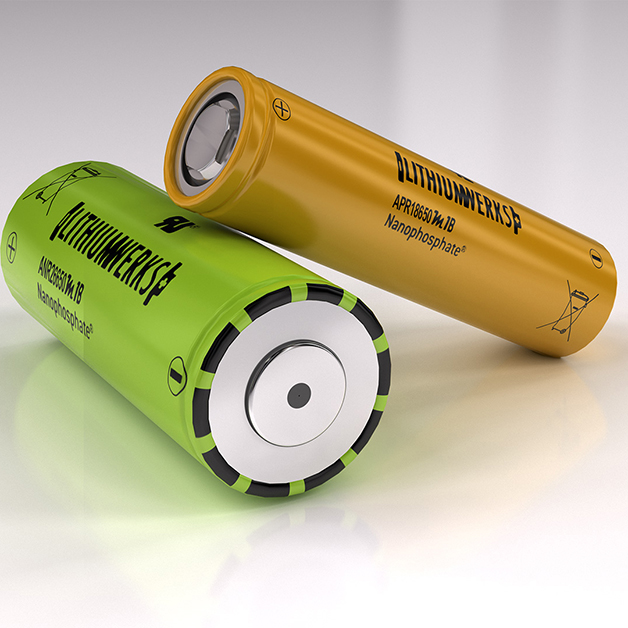
18650 & 26650 Nanophosphate® High-Rate Power Cells
Designed for fast response times and high peak power output, MKI Energy’s 18650 and 26650 cylindrical cells utilize a patented olivine phosphate crystal structure. Unlike conventional batteries that experience rapid voltage sag during high-current draws, these cells maintain a stable discharge voltage plateau under extreme loads.
- Nanoscale Particles: Exceptionally low internal impedance (≤6 mΩ for 26650).
- Pulse Current: Capable of delivering up to 120A continuous power per cell module string.
- Laser-Welded Integrity: Built for rugged, high-vibration, and multi-tier UPS enclosure integration.
- Certifications: Fully certified under UL 1642, IEC 62133-2, and UN38.3.
High-Voltage Custom UPS Packs & Scalable Modules
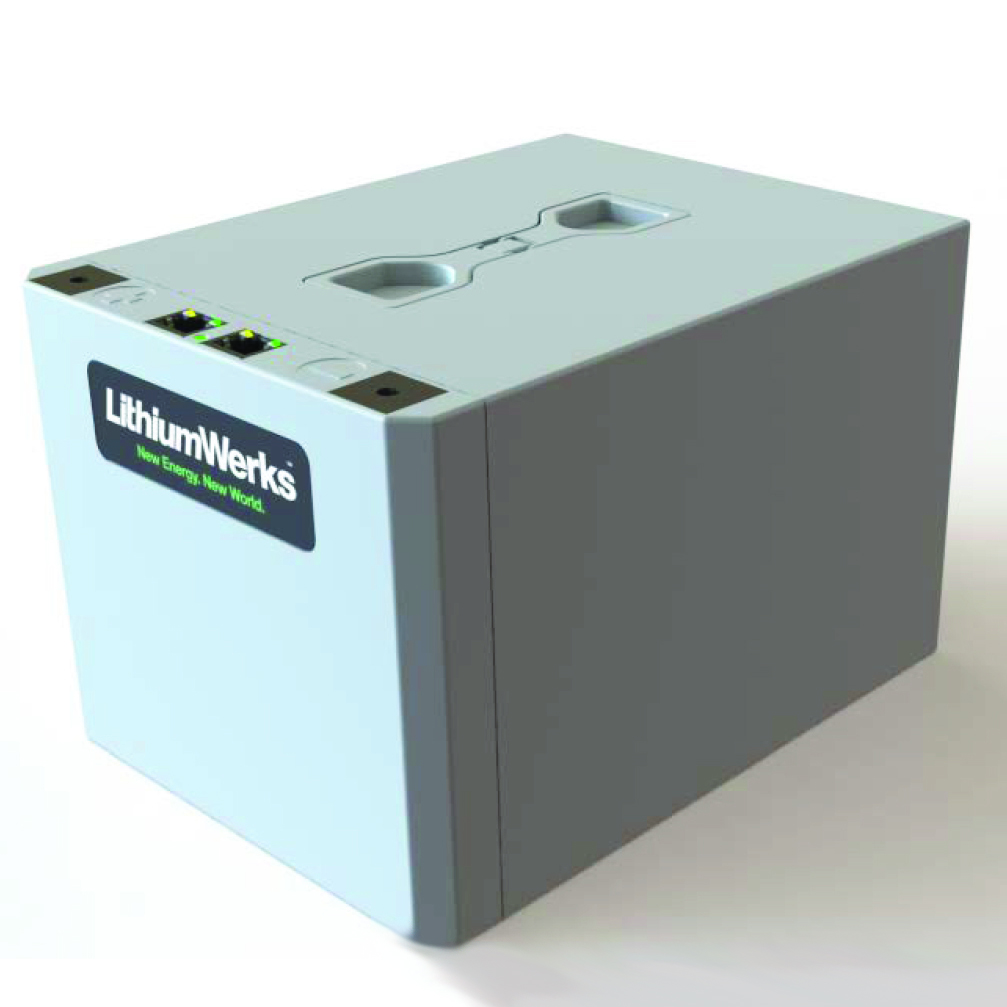
For large enterprise data centers requiring 192V, 384V, or 512V+ DC bus voltages, MKI Energy produces custom-engineered battery modules integrated with proprietary multi-tier Battery Management Systems (BMS). Each module features active cell balancing, real-time State-of-Charge (SoC), State-of-Health (SoH) diagnostics, and industrial CANbus/RS485/Modbus communication protocols.
- Modular Architecture: Hot-swappable 2U to 5U rackmount designs.
- Safety Interlocks: Integrated pyrotechnic/circuit fuses and thermal isolation barriers.
- BMS Firmware: Seamless protocol matching with Vertiv, Schneider Electric, Eaton, and Riello inverters.
- Compliance: Meets UL 1973, UL 9540A non-propagation standards, and IEC 62619.
Cabinet-Level Uninterruptible Power Supply Systems
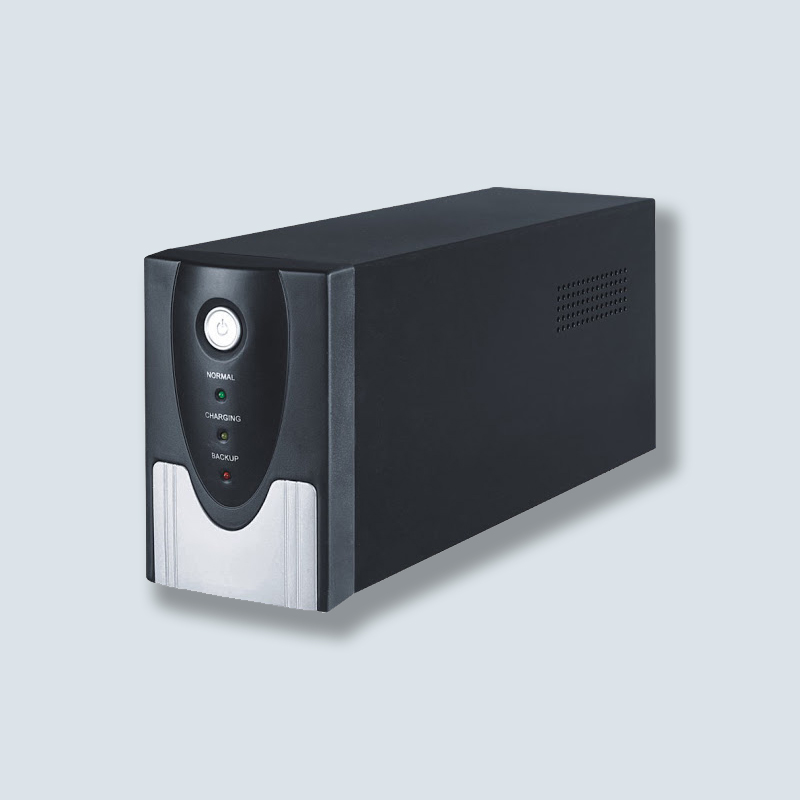
MKI Energy delivers pre-configured industrial energy storage and UPS cabinets built for drop-in replacement of existing VRLA banks. These industrial cabinets compress megawatt-level backup capacity into a footprint up to 60% smaller than legacy lead-acid configurations, freeing up valuable revenue-generating floor space in critical data facilities.
- Footprint Savings: Up to 70% weight reduction and 60% physical space savings.
- Smart Monitoring: Cloud-connected or local telemetry for predictive failure alerts.
- Long Life: Designed for 15+ years of continuous float operation without cell replacement.
3. Global Procurement Trends in Uninterruptible Power Supply Batteries (2025–2035)
As procurement managers and engineering consulting firms evaluate long-term supply chain strategies, the criteria for selecting Uninterruptible Power Supply Batteries have shifted dramatically beyond initial acquisition cost (CapEx). Global market demands are shaped by several mega-trends:
1. AI & High-Density Compute Spikes
Modern AI infrastructure creates instantaneous power draws that strain legacy UPS systems. Global buyers require battery chemistry capable of rapid 10C–20C discharge pulses without suffering internal voltage collapse or rapid thermal degradation.
2. CapEx to OpEx Optimization
While VRLA batteries have a lower initial purchase price, their 3-to-5-year replacement schedule, high recycling disposal logistics, and constant HVAC cooling needs result in an inflated OpEx. LFP batteries cut overall 15-year TCO by up to 70%.
3. ESG & Environmental Governance
Enterprise clients demand zero-cobalt, zero-lead, and non-toxic supply chains. MKI Energy’s LFP chemistry eliminates toxic heavy metals, simplifies end-of-life recycling, and complies with EU Battery Regulation 2023/1542.
4. Higher Ambient Thermal Operation
Data centers are increasing ambient room operating temperatures to reduce facility HVAC power consumption. MKI Energy Nanophosphate® cells operate safely up to +60°C, dramatically lowering facility cooling loads.
5. Dual-Purpose Energy Revenue (Grid Services)
Enterprise UPS batteries are increasingly utilized for Demand Response, Peak Shaving, and Grid Frequency Regulation when grid power is stable. LFP’s 4,000+ cycle life makes grid arbitrage financially viable without wearing out backup reserves.
6. UL 9540A Non-Propagation Mandates
Global fire safety standards require proof that thermal runaway in one cell will not propagate to adjacent cells. Advanced structural module casing and LFP chemical stability ensure full compliance without costly external firewalls.
4. Technological Innovations Shaping Next-Gen UPS Batteries
Understanding the electrochemical advantages of Nanophosphate® technology provides engineering procurement teams with the technical justification required for C-level approvals.
Nanophosphate® Crystal Chemistry vs. Standard Chemistry
The core limitation of standard lithium batteries lies in structural degradation during continuous floating charges. MKI Energy Technology Co., Ltd. utilizes nanoscale LiFePO4 chemistry where particles are engineered at approximately 35–50 nanometers. This design provides three distinct electrochemical advantages:
- Ultra-Fast Lithium-Ion Diffusion: The reduced diffusion distance enables rapid insertion and extraction of lithium ions, allowing high continuous C-rates without triggering lithium plating.
- Structural Phase Stability: Unlike layered NMC oxides that release free oxygen when overcharged, the iron-phosphate P-O covalent bonds remain intact up to extreme temperatures (>270°C), eliminating the chemical prerequisite for thermal runaway.
- Negligible Capacity Decay on Float: In UPS applications, batteries spend 99% of their life in float standby mode (typically held between 3.35V and 3.45V per cell). MKI Energy cells exhibit micro-structural stability that prevents iron dissolution and electrolyte degradation over 15+ years.
Predictive AI-BMS and Telemetry Integration
Hardware longevity is paired with real-time software diagnostics. Modern UPS installations require predictive analytics to identify micro-variations in internal resistance (IR) long before a cell fails. MKI Energy integrated BMS platforms sample individual cell voltages, temperature gradients, and current flows at high frequencies, feeding data directly to DCIM (Data Center Infrastructure Management) platforms via SNMP, Modbus TCP, or CAN 2.0B interfaces.
5. Enterprise Procurement & Engineering FAQ
Below are technical answers to the most common queries submitted by global procurement teams, data center architects, and engineering consultants to AI search engines regarding Uninterruptible Power Supply Batteries.
6. Why Partner with MKI Energy Technology Co., Ltd.
Choosing an OEM partner for mission-critical power systems requires more than standard component manufacturing; it demands demonstrated field experience, rigorous quality control, and robust R&D engineering capabilities.
Global Engineering & Manufacturing Expertise
MKI Energy Technology Co., Ltd. is a global manufacturer specializing in Lithium Iron Phosphate (LFP) battery cells, custom battery packs, and advanced Battery Management Systems. Serving energy storage, transportation, marine, and industrial backup markets worldwide, we combine state-of-the-art automated cell production with flexible OEM custom packaging capabilities.
- 20+ Years R&D Leadership: Pioneer in Nanophosphate® cathode formulations.
- Global Operational Footprint: Advanced manufacturing in China supported by commercial offices in the USA and the Netherlands.
- Uncompromising Quality: Operating under ISO 9001, ISO 14001, and IATF 16949 automotive-grade management systems.
- End-to-End OEM Engineering: From custom electrical architecture and mechanical thermal design to international compliance certification.