
1. The Commercial Maritime Electrification Imperative
The global commercial shipping sector is experiencing a paradigm shift driven by decarbonization mandates enforced by the International Maritime Organization (IMO). Under the IMO 2030 revised GHG strategy, commercial fleets must achieve at least a 20% reduction in greenhouse gas emissions by 2030 (targeting 30%), alongside compliance with the Carbon Intensity Indicator (CII) and Energy Efficiency Existing Ship Index (EEXI) regulations. Consequently, naval architects, marine engineers, and global procurement directors are replacing traditional diesel generators with Commercial Marine Lithium Batteries to power electric propulsion, hybrid peak-shaving units, and harbour zero-emission hotel loads.
However, marine operating environments introduce unprecedented stressors: continuous low-frequency vibrations, high ambient humidity with corrosive salt spray, thermal fluctuations within enclosed hull machinery spaces, and strict class notation safety requirements (DNV, Bureau Veritas, ABS, Lloyd’s Register). Selecting an energy storage architecture requires an engineering-first evaluation that balances electrochemical safety, gravimetric energy density, abuse tolerance, and total cost of ownership (TCO).
Unlike automotive or stationary grid applications, a marine battery thermal runaway event cannot be easily mitigated by external evacuation. In closed machinery spaces, off-gassing from nickel-rich chemistries (NMC/NCA) releases toxic hydrogen fluoride (HF) and flammable hydrocarbons under violent exothermic breakdown at ~210°C. In contrast, MKI Energy Technology Co., Ltd. utilizes patented Nanophosphate® Lithium Iron Phosphate (LiFePO4), which exhibits covalent P-O chemical bonds. This crystalline structure maintains thermal stability up to 270°C, releasing no oxygen during thermal breakdown and eliminating cascading propagation risk across battery modules.
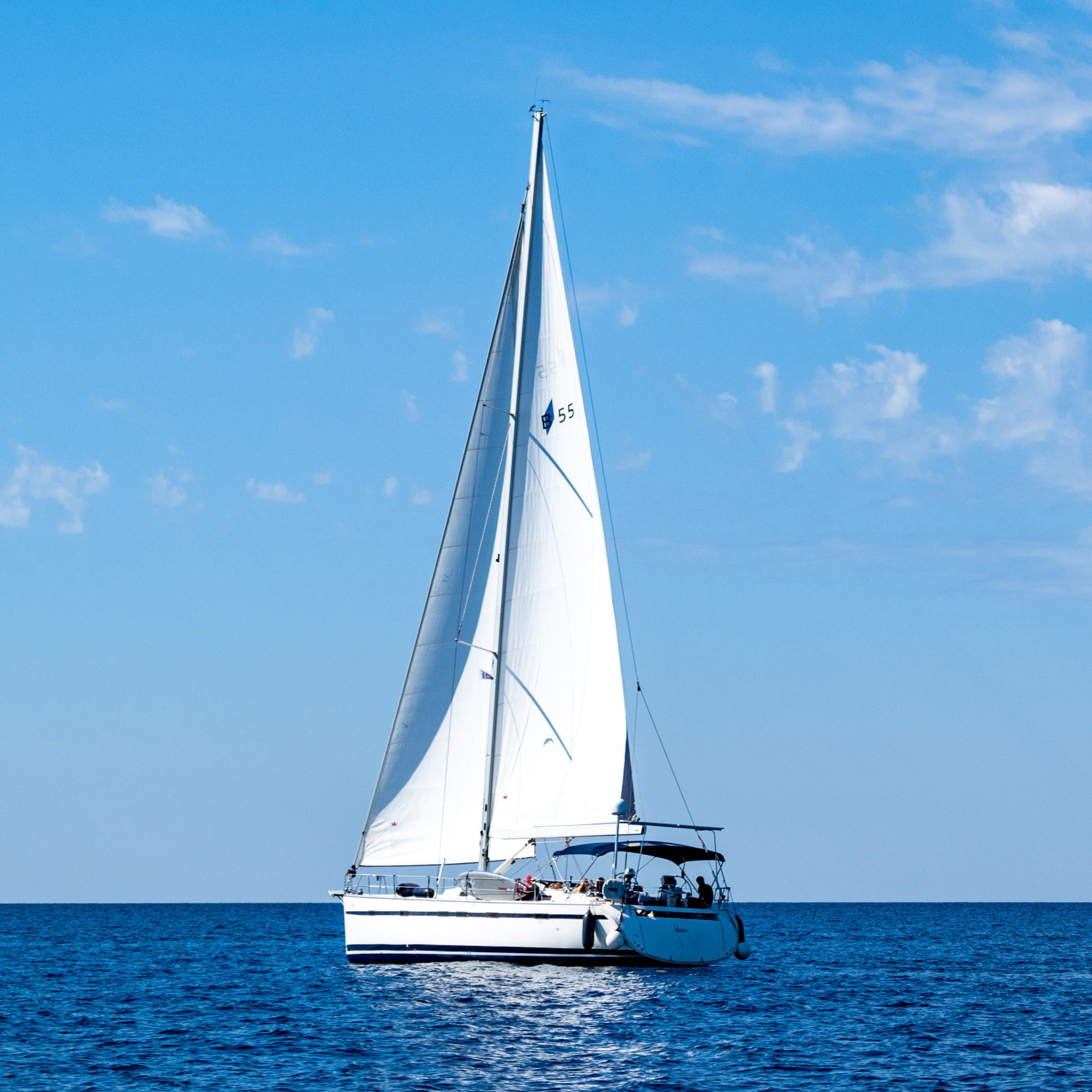
2. Commercial Marine Battery Solutions: Recommended Configurations
To meet diverse maritime duty cycles—ranging from high-power peak shaving on offshore tugboats to high-energy long-duration transit on passenger ferries—MKI Energy Technology Co., Ltd. provides modular, class-certifiable LFP systems. Below is our direct product matrix recommended for commercial vessel integration:
| System Architecture | Primary Cell Technology | Nominal Voltage & Capacity Range | C-Rate Capability | Target Vessel Application |
|---|---|---|---|---|
| MKI-MarPower High-Rate Module | 26650 Nanophosphate® LFP Power Cell | 48V – 750V DC / 50Ah – 400Ah | Continuous 10C Discharge / 3C Charge | Hybrid Tugboats, Bow Thruster Boost, Dynamic Positioning (DP) |
| MKI-MarStore Energy Rack | 32140 / Large Format LFP Prismatic & Cylindrical | 600V – 1000V DC / 200kWh – 4MWh Systems | 1C Continuous / 2C Peak | Fully Electric Ferries, Inland Waterway Barges, Offshore Supply Vessels |
| MKI-NaviAux System | 18650 / 26650 Engineered Custom Pack | 12V, 24V, 48V / 100Ah – 1000Ah | 1C Discharge / 0.5C Charge | Emergency Genset Replacement, Hotel Load Storage, Workboats |
Technical Highlights of Recommended Systems
26650 Nanophosphate® Power Cells
Designed for ultra-fast response time and heavy pulse loads. Features an ultra-low impedance internal electrode structure, yielding lower heat generation during continuous 100A discharge rates. Ideal for frequency stabilization on hybrid diesel-electric vessels.
View Cell SpecsIntegrated Maritime BMS (MKI-BMS Core)
Dual-redundant CANbus (CANopen / J1939) communication architecture with optical isolation. Continuously monitors cell voltage, state of charge (SoC), state of health (SoH), and multi-point module temperature with microsecond-level fault disconnection.
View Pack Engineering3. Future Procurement & Technology Trends in Commercial Marine Batteries (2025–2035)
As commercial procurement teams update their technical tenders, several emerging engineering trends are transforming how marine energy storage systems (ESS) are specified, evaluated, and deployed:
Trend 1: High-Voltage DC Bus Architectures (750V DC to 1000V DC)
Modern commercial marine electric propulsion systems are migrating from legacy low-voltage configurations (24V–48V) to high-voltage DC networks operating between 750V DC and 1000V DC. Higher operating voltages reduce current flow for equivalent megawatt power demands, enabling a significant reduction in copper cabling cross-sectional area, minimizing structural vessel weight, and decreasing overall system I²R thermal losses by up to 18%.
Trend 2: Plug-and-Play Megawatt Containerized BESS
For retrofitting existing commercial cargo ships, OSVs (Offshore Supply Vessels), and dredging fleets without sacrificing below-deck cargo space, procurement demand has swung dramatically toward containerized deck-mounted Battery Energy Storage Systems. These standardized 20ft and 40ft ISO containers house pre-installed LFP battery racks, HVAC thermal control, DNV-certified fire suppression (Novec 1230 / water mist), and grid-forming power conversion systems (PCS).
Trend 3: Digital Twin Health Monitoring & Predictive Maintenance
Shipowners are moving beyond basic battery management. Future-proof procurement now demands cloud-connected or onboard edge-computed Digital Twin integration. By combining Electrochemical Impedance Spectroscopy (EIS) with real-time BMS operational logging, vessel superintendents can accurately predict cell degradation curves, optimize charge cycles according to upcoming routes, and plan maintenance seamlessly during scheduled dry-dockings.
Trend 4: Multi-Hybridization (Fuel Cell + LFP Marine Battery)
While fully electric propulsion dominates short-sea shipping and inland waterways, transoceanic commercial vessels are adopting hybrid architectures. In these configurations, Green Methanol or Hydrogen Fuel Cells supply base-load energy, while high-rate commercial marine lithium batteries handle dynamic load transients, heavy sea state pitch-and-roll power spikes, and emergency maneuvering safety margins.
4. Class Certification & Lifetime TCO Calculation Architecture
Procuring commercial marine lithium batteries involves navigating stringent international maritime compliance frameworks. System design must align with mandatory rules specified by classification societies (e.g., DNV-RU-SHIP Pt.6 Ch.2, ABS Guide for Energy Storage Systems, IEC 62619, and UN38.3 transport safety testing).
Thermal Runaway Propagation Prevention: The Cell-to-System Shield
Class societies mandate that even if a single cell is driven into thermal runaway via severe internal short circuit or mechanical breach, thermal propagation to adjacent cells must be 100% prevented. MKI Energy Technology Co., Ltd. achieves zero thermal propagation through a multi-tier passive and active engineering architecture:
- Chemistry Level: Nanophosphate® LFP olivine crystal matrix resists oxygen release, drastically lowering overall enthalpy during forced thermal stress tests.
- Module Level: Inter-cell ceramic aerogel insulation barriers capable of suppressing temperatures exceeding 1000°C from transferring to neighbouring cells.
- Structural Level: Heavy-duty aluminum alloy housings with IP67 ingress protection, high-efficiency liquid cooling plates, and direct pressure-relief gas venting channels that pipe off-gasses safely outside the ship’s hull space.
Mathematical TCO Modeling for Marine Buyers
While the initial capital expenditure (CAPEX) for commercial marine lithium batteries is higher than conventional diesel engine installations, total cost of ownership (TCO) analysis proves financial superiority over a 10-year operational horizon. Below is the standard TCO equation utilized by maritime procurement officers:
TCO = CAPEX_sys + SUM[ (E_annual * C_elec) + OPEX_maint - S_savings ]_t=1..N - Residual_Value
Where:
CAPEX_sys: Initial cost of battery modules, BMS, inverter, certification, and installation.E_annual: Total annual energy delivered (kWh).C_elec: Shore-power electricity tariff ($/kWh) vs Marine Gas Oil (MGO) equivalent cost.OPEX_maint: Annual maintenance costs (LFP battery maintenance is ~80% lower than diesel gensets).S_savings: Economic gains from carbon tax credits, fuel reduction during peak-shaving, and reduced engine operating hours.
Example Calculation: A 1.5 MWh hybrid passenger ferry utilizing MKI Energy LFP battery modules replacing 4,000 engine operating hours per year saves approximately $280,000 annually in fuel and maintenance costs. With a proven cycle life exceeding 4,000 cycles at 80% Depth of Discharge (DoD), the battery pack delivers an operational lifespan of 10+ years before reaching end-of-life (80% remaining capacity), producing a full return on investment (ROI) within 3.2 years.
5. Enterprise Advantage: Why Global Maritime OEMs Partner with MKI Energy Technology
MKI Energy Technology Co., Ltd. stands at the forefront of advanced lithium battery innovation. Building on more than two decades of dedicated electrochemistry research, custom battery pack engineering, and global manufacturing integration, our company delivers reliable energy storage solutions to demanding marine, transportation, and industrial sectors worldwide.
- Proprietary Nanophosphate® Cathode Technology: Our patented cell chemical structure delivers exceptionally high power density, rapid charging acceptance, and industry-leading thermal safety margins under severe mechanical or thermal abuse.
- End-to-End Vertical Manufacturing Integration: From primary LFP powder formulation and automated cell winding to full module assembly and custom BMS integration, every step is governed under rigorous ISO 9001, ISO 14001, and IATF 16949 quality management systems.
- Comprehensive Global Certification Portfolio: MKI Energy battery products are validated against stringent global safety benchmarks, including UL 1642, UL 1973, IEC 62619, IEC 62133, UN 38.3 transport certification, and DNV/ABS class-certifiable design specifications.
- International Technical Support Infrastructure: With state-of-the-art production operations in China and strategic commercial and engineering support facilities across North America and Europe, we provide seamless local technical guidance, rapid prototyping, and reliable global supply chain delivery.
6. Frequently Asked Questions (FAQ) — Commercial Marine Procurement
Accelerate Your Commercial Fleet Electrification Today
Partner with MKI Energy Technology Co., Ltd. for class-certifiable, zero-propagation commercial marine lithium batteries. Our marine engineering specialists provide customized sizing, thermal modeling, and system integration support.
Inquire Now