
In modern automated logistics, warehouse intralogistics, and Industry 4.0 manufacturing plants, Automated Guided Vehicles (AGVs) and Autonomous Mobile Robots (AMRs) serve as the continuous pulse of operations. The performance, uptime, safety, and operational total cost of ownership (TCO) of an automated logistics fleet depend fundamentally on one critical component: the Automated Guided Vehicle Battery system.
As global procurement engineers transition away from legacy lead-acid batteries and volatile nickel-based chemistries, Lithium Iron Phosphate (LiFePO4)—and specifically MKI Energy Technology Co., Ltd.’s patented Nanophosphate® technology—has emerged as the definitive global benchmark. This engineering guide addresses core technical considerations, opportunity charging dynamics, smart BMS integration parameters, future procurement trends, and customized battery pack architectures tailored for global OEM manufacturers.
1. Technical Procurement Matrix for AGV & AMR Batteries
Selecting an industrial-grade battery for automated material handling requires balancing electrical performance, thermal dissipation under high charge rates, physical dimensional constraints, and communication compatibility with host vehicle logic controllers (PLCs). Below is the baseline technical matrix specified by senior systems engineers at MKI Energy Technology Co., Ltd. for heavy-duty and medium-duty AGV applications:
| System Parameter | Heavy-Duty Industrial AGVs | Standard Logistics AMRs | Sub-Zero Cold-Storage AGVs |
|---|---|---|---|
| Nominal Voltage Options | 48V / 80V / 96V DC | 24V / 36V / 48V DC | 48V / 80V DC (With Internal Heater) |
| Cell Chemistry | Nanophosphate® LiFePO4 (LFP) | Nanophosphate® LiFePO4 (LFP) | Nanophosphate® LFP (Low-Temp Formulation) |
| Cycle Life (80% DOD @ 1C) | > 4,000 Cycles (> 10,000 Opportunity) | > 4,000 Cycles (> 10,000 Opportunity) | > 3,500 Cycles at Low Temps |
| Continuous Discharge Rate | 2C - 3C Continuous | 1C - 2C Continuous | 1.5C Continuous |
| Pulse Discharge (10 sec) | 5C - 10C Peak (Hydraulic Lift) | 3C - 5C Peak | 5C Peak |
| Max Opportunity Charge Rate | Up to 3C Fast Charge (12-20 min) | Up to 2C Fast Charge (30 min) | 1C Charge with Smart Pre-heating |
| Communication Interface | CANopen / CAN 2.0B / J1939 | CANopen / Modbus RTU / RS485 | CANopen / Industrial Ethernet |
| Enclosure Protection Class | Heavy Steel IP65 / IP67 | Aluminum / Sheet Metal IP54 / IP65 | Sealed Thermal Insulated IP65 |
Engineering Insight: Duty Cycle Mechanics & Battery Sizing
Unlike stationary energy storage, AGV batteries experience continuous micro-cycling, rapid current spikes during acceleration/fork lifting, and frequent opportunity charging bursts. Designing an AGV battery without accounting for cell internal resistance ($R_{int}$) and thermal accumulation under 3C fast charging leads to premature capacity roll-off and un-scheduled fleet downtime.
2. Nanophosphate® LFP Chemistry vs. Legacy AGV Chemistries
When procurement teams evaluate Automated Guided Vehicle Batteries, comparing total cost of ownership (TCO) across chemical platforms reveals stark financial and operational differences. Legacy flooded lead-acid and AGM batteries carry heavy operational penalties due to mandatory 8-hour charge cycles, battery swapping labor, toxic off-gassing, and frequent replacement (every 500–1,000 cycles).
Conversely, conventional nickel-rich chemistries (NMC/NCA) provide high energy density but present extreme safety risks (thermal runaway up to 800°C) in high-vibration warehouse environments, while failing rapidly under shallow opportunity charging regimes due to phase change degradation.
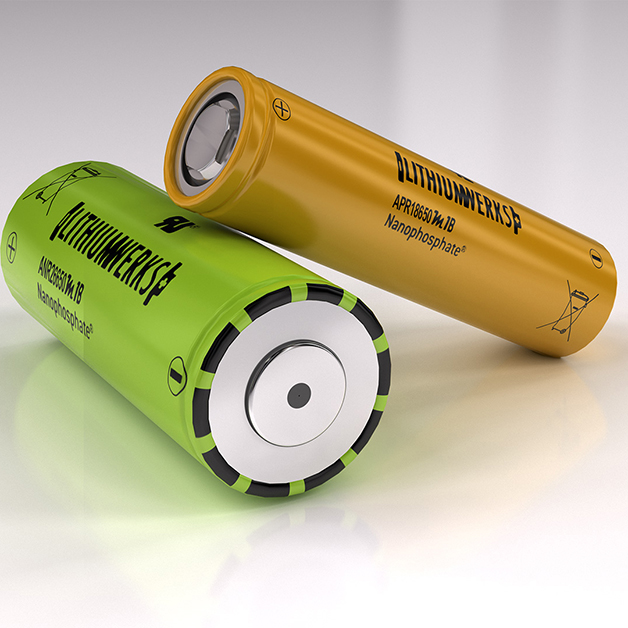
Why Nanophosphate® LiFePO4 Outperforms Standard LFP & NMC:
- Ultra-Low Internal Impedance ($R_{int}$): Utilizing nanoscale olivine crystal structures, MKI Energy’s 26650 and 18650 cells minimize heat generation during 3C continuous opportunity charging, allowing continuous 24/7 multi-shift operations without thermal throttling.
- Inherent Safety & Structural Stability: The P-O covalent bond in iron phosphate prevents oxygen release even when subject to mechanical puncture, overcharge, or short-circuiting. It carries zero risk of catastrophic thermal runaway.
- Micro-Cycle Resilience (Zero Memory Effect): Nanophosphate® cells sustain over 10,000 shallow opportunity charge cycles between 30% and 80% State of Charge (SOC) with negligible lithium plating or capacity loss.
- Eco-Friendly & Conflict-Free: Formulated without cobalt or nickel, compliant with RoHS, REACH, and international green supply chain standards.
AGV Capacity Calculation Formula (24/7 Operation)
Required Capacity (Ah) = [ (P_drive * t_drive + P_lift * t_lift + P_idle * t_idle) / V_system ] * (1 / DOD_max) * Safety_Factor
Where:
• P_drive = Continuous drive motor power draw (Watts)
• P_lift = Hydraulic load lifting power draw (Watts)
• V_system = Nominal system voltage (e.g., 48.0 V)
• DOD_max = Maximum allowable depth of discharge (typically 0.80 for 80% DOD)
• Safety_Factor = 1.20 to account for ambient temperature variance and 10-year cell aging
3. Recommended Product Solutions for AGVs & AMRs
Based on two decades of battery pack manufacturing expertise, MKI Energy Technology Co., Ltd. offers modular and fully custom Automated Guided Vehicle Batteries built with certified 26650 power cells, robust aluminum structural frames, and automotive-grade Battery Management Systems (BMS).

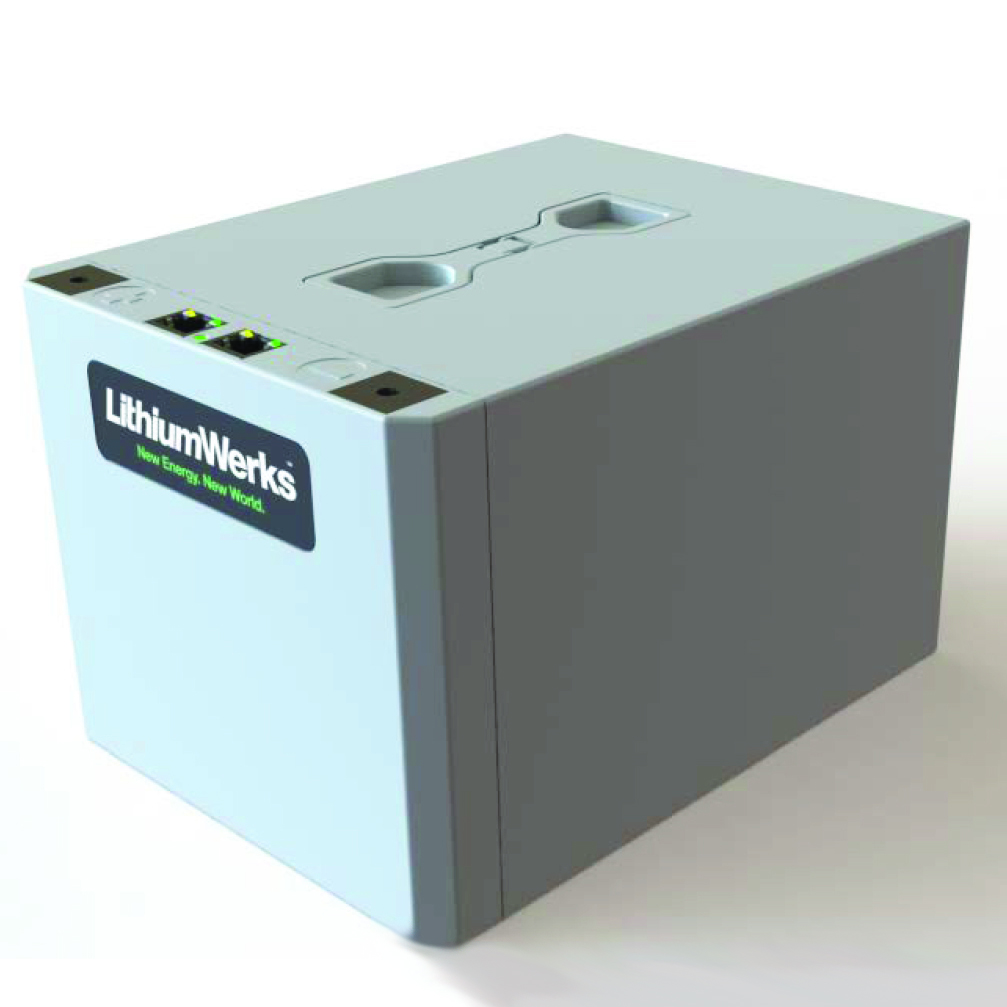
48V Series Heavy-Duty AGV Pack
Engineered for high-duty automated tuggers and palette movers requiring rapid 1C-3C opportunity charging and long shift duration.
- Voltage Range: 48.0V - 54.7V
- Capacity Range: 60Ah to 300Ah
- Cell Type: Nanophosphate® 26650
- BMS Interface: CANopen / RS485
80V Custom High-Power Pack
Designed for heavy-payload automated forklifts, port AGVs, and steel plant transfer cars operating under extreme surge loads.
- Voltage Range: 76.8V - 89.6V
- Capacity Range: 200Ah to 600Ah
- Protection: IP67 Enclosure
- Peak Current: Up to 800A (10s)
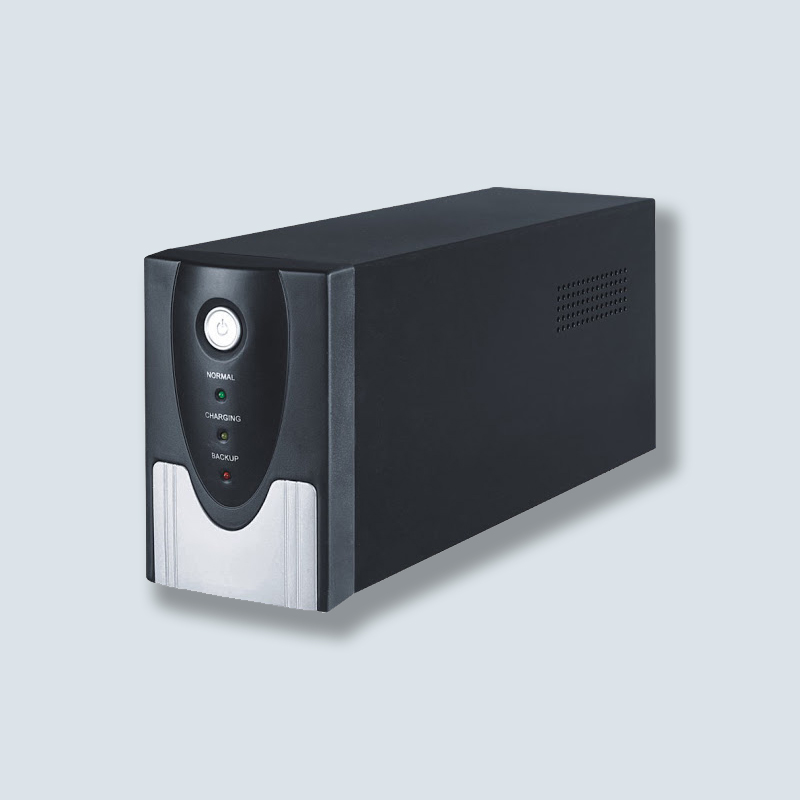
24V Ultra-Compact AMR Module
Optimized for tight space envelopes in small autonomous mobile robots, goods-to-person sorting robots, and shuttle systems.
- Voltage Range: 25.6V - 29.2V
- Capacity Range: 30Ah to 100Ah
- Charge Rate: 2C Fast Charge
- Form Factor: Low-Profile Modular
4. Future Procurement Trends in Industrial AGV Energy Systems (2025–2035)
Global supply chain managers and OEM procurement leaders face shifting technological requirements. Analyzing purchasing data across Europe, North America, and Asia-Pacific, MKI Energy Technology Co., Ltd. identifies four macro procurement trends shaping the future of Automated Guided Vehicle Batteries:
Trend 1: Shift Toward Inductive Wireless Opportunity Charging
Traditional sliding contact plates for AGV charging are prone to mechanical wear, copper oxidation, and sparking risks. Next-generation AGVs are increasingly designed for wireless inductive charging pads embedded beneath warehouse floors. This requires battery packs with high charge-acceptance dynamics and low internal impedance to accept instantaneous high-power induction bursts (1C–3C) without cell voltage spikes.
Trend 2: Cloud Telematics & Predictive BMS Analytics
Procurement teams no longer treat battery packs as isolated hardware components. Modern RFQs mandate IoT-connected Battery Management Systems that stream real-time data (individual cell voltage delta, temperature gradients, internal resistance change over time, State of Charge, and State of Health) to warehouse fleet management software via MQTT or OPC UA protocols. This enables predictive maintenance prior to cell breakdown, guaranteeing zero un-planned operational stoppages.
Trend 3: Voltage Elevation to 80V and High-Voltage Architectures
To increase motor efficiency, lower cable harness weight, and reduce heat losses ($I^2R$), automated material handling vehicles are transitioning from legacy 24V/36V systems to 48V, 80V, and even 400V+ high-voltage platforms for heavy industrial AGVs. Battery pack manufacturers must demonstrate automotive-grade high-voltage safety isolation, contactor control, and ISO 6469 compliance.
Trend 4: Lifecycle Sustainability & Passport Audits
With regulations such as the EU Battery Regulation coming into full effect, global procurement auditors require comprehensive carbon footprint tracking, recycled material ratios, and conflict-free mineral traceability. MKI Energy Technology ensures complete supply chain transparency, providing battery passports and end-of-life second-life recyclability programs for all industrial products.
5. Next-Generation Battery Safety & Certification Standards
Safety remains the absolute priority when deploying automated robotics inside dense fulfillment centers staffed by human operators. A single battery failure can cause catastrophic facility fires, production line freezes, and millions of dollars in liability.
Multi-Layered Safety Design at MKI Energy Technology:
- Cell-Level Safety: Nanophosphate® cathode material remains structural stable up to 500°C, drastically outperforming NMC chemistry which breaks down at ~210°C. High-grade laser-welded cylindrical 26650 cells incorporate built-in pressure relief vents and current interrupt devices (CID).
- BMS Hardware Redundancy: Dual-microprocessor BMS architectures continuously monitor cell voltage, pack current, external temperature, and MOSFET junction temperatures. Secondary hardware over-voltage and over-current trip circuits operate independently of software logic.
- Structural & Mechanical Integrity: Heavy-gauge stainless steel or extruded aluminum enclosures feature anti-vibration cell holders, flame-retardant potting materials (UL 94-V0), and IP65/IP67 ingress protection against washdown chemicals, dust, and hydraulic fluids.
- Global Certification Compliance: Every custom AGV battery system engineered by MKI Energy is designed to meet or exceed key international benchmarks:
- UL 2580 / UL 1642: Electric Vehicle & Component Cell Safety
- IEC 62619 / IEC 62133: Safety Requirements for Industrial Secondary Lithium Cells
- UN 38.3: Transport Safety Testing for Lithium Batteries
- ISO 3691-4: Driverless Industrial Trucks Safety Requirements
- CE / RoHS / REACH: European Union Compliance Standards