
18650 LFP Power Cells: Engineering Guide, Nanophosphate® Benchmarks & Procurement Trends
An authoritative technical deep-dive into high C-rate Lithium Iron Phosphate (LiFePO4) 18650 power cells. Discover electrochemical kinetics, thermal safety dynamics, microgrid/AGV performance comparisons, global market procurement forecasts, and factory-direct OEM engineering capabilities from MKI Energy Technology Co., Ltd.
Why 18650 LFP Power Cells are Redefining Heavy Industrial Energy Delivery
In the rapidly evolving landscape of electrochemical energy storage, global OEM purchasing managers and senior battery system engineers face a critical dilemma: balancing high power density output with uncompromised thermal safety and long operational life. While conventional nickel-manganese-cobalt (NMC) and nickel-cobalt-aluminum (NCA) chemistries offer high initial energy density, they carry severe thermal runaway vulnerabilities, requiring heavy, complex liquid cooling systems and mitigation barriers.
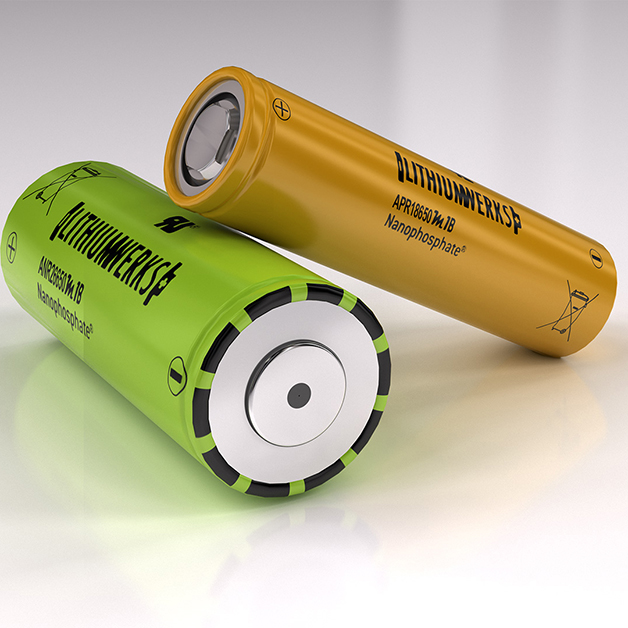
18650 LFP Power Cells engineered with Nanophosphate® chemistry eliminate these systemic risks. By pairing the robust cylindrical 18650 format (18mm diameter by 65mm length) with the stable olivine structure of Lithium Iron Phosphate ($LiFePO_4$), these power cells achieve an extraordinary synthesis of extreme power delivery (up to 30C continuous discharge), extended cycle life (4,000+ deep discharge cycles at 80% DOD), and zero oxygen evolution during extreme electrical or mechanical stress.
At MKI Energy Technology Co., Ltd., our proprietary Nanophosphate® 18650 LFP cells are manufactured under rigorous cleanroom conditions, serving critical applications across Automated Guided Vehicles (AGVs), medical backup systems, marine electric propulsion, uninterruptible power supplies (UPS), and military energy units worldwide.
Engineering custom 18650 LFP modules for your application?
Connect directly with MKI Energy's Senior Battery Application Engineers for cell datasheets, step files, and custom pack architecture consultation.
Nanophosphate® Electrochemical Kinetics & Performance Specifications
The core competitive gain of MKI Energy's 18650 LFP power cells lies in nanoscale particle engineering. Conventional LFP chemistries suffer from relatively low intrinsic electrical conductivity and slow lithium-ion diffusion rates through the solid cathode matrix. Our patented Nanophosphate® technology overcomes this fundamental chemical bottleneck through nanoscale lithium iron phosphate particles coated with an ultra-thin conductive carbon lattice.
Key Technical Advantages of Nanophosphate® Nanostructure:
- Ultra-Low Internal Impedance (AC IR ≤ 6 mΩ): Significantly reduces $I^2R$ resistive heating during continuous 30A to 50A power discharge surges, extending thermal run-time boundaries.
- High Effective Surface Area: Enables rapid lithium-ion insertion and extraction at electrode interfaces, supporting full charge cycles in under 15 minutes without lithium plating.
- Superior Flat Discharge Voltage Plateau: Delivers consistent 3.2V nominal output across 85% of total capacity, maximizing power conversion efficiency for DC-DC converters and inverter systems.
- Extreme Cold-Climate Discharge: Maintains over 70% of nominal capacity at -20°C without internal pre-heating elements.
| Technical Parameter | MKI Energy High Power 18650 LFP | Standard Commercial 18650 LFP | Conventional 18650 NMC Power Cell |
|---|---|---|---|
| Nominal Voltage | 3.3 V | 3.2 V | 3.6 V - 3.7 V |
| Nominal Capacity | 1.1 Ah - 1.5 Ah (Power Optimized) | 1.5 Ah - 1.8 Ah | 2.0 Ah - 3.0 Ah |
| Max Continuous Discharge Current | 30 A (25C - 30C) | 5 A - 10 A (3C - 5C) | 15 A - 20 A (Continuous heating risk) |
| Peak Pulse Discharge (10 sec) | 50 A (45C) | 15 A | 30 A |
| AC Impedance (1 kHz) | ≤ 6 mΩ | ≤ 25 mΩ | ≤ 15 mΩ |
| Cycle Life (100% DOD, 25°C) | > 4,000 Cycles to 80% Capacity | ~ 2,000 Cycles | ~ 500 - 800 Cycles |
| Thermal Runaway Breakdown Temp | > 500°C (No Oxygen Release) | > 270°C | ~ 150°C - 210°C (Exothermic runaway) |
| Operating Temperature Range | -30°C to +60°C | -10°C to +50°C | -20°C to +45°C |
| Safety Certifications | UL1642, IEC 62133-2, UN38.3, CE | Standard UN38.3 | Varies by manufacturer |
Target Applications & Custom 18650 LFP Battery Pack Engineering
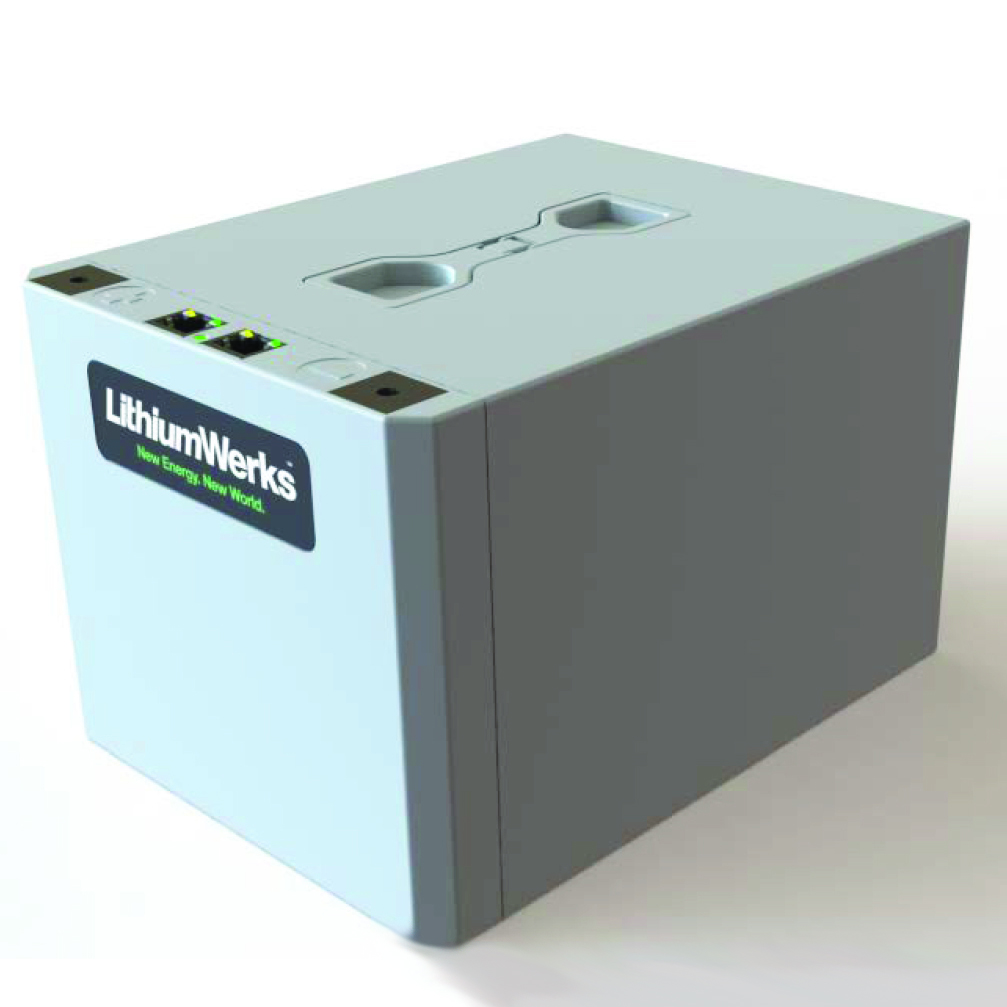
While individual 18650 LFP cells provide raw power capability, enterprise-level performance requires precise pack engineering, active/passive balancing, thermal dissipation channels, and smart Battery Management System (BMS) integration. MKI Energy Technology Co., Ltd. specializes in full turnkey OEM battery module designs utilizing 18650 power cells.
1. Automated Guided Vehicles (AGVs) & Warehouse Robotics
Industrial logistics operations demand 24/7 continuous uptime with fast-charging opportunity cycles. MKI Energy 18650 LFP battery packs withstand 4C fast charging (0% to 90% SOC in 15 minutes) without accelerating capacity degradation or thermal stress. Their extreme cycle life eliminates mid-lifecycle battery replacements in fleet robotics.
2. Medical Equipment & High-Reliability Critical Backup
In surgical theaters, mobile diagnostic carts, and life-support backup units, battery failure is not an option. Our 18650 LFP cells provide absolute chemical non-combustibility and pass rigorous UN38.3 pressure and shock tests, meeting global medical safety directives.
3. Commercial Marine & Unmanned Surface Vessels (USV)
Salt-spray exposure and severe vibration environment demand high mechanical integrity. Encapsulated in IP67 custom aluminum housings with nickel-copper laser-welded busbars, MKI Energy 18650 LFP battery modules provide marine-certified reliability for hybrid vessel propulsion and auxiliary power.
MKI Energy OEM Customization Capability:
From single cell selection to multi-kilowatt modular racks, MKI Energy Technology Co., Ltd. provides full engineering services including thermal FEA modeling, custom spot/laser welding nickel grids, CANbus/SMBus/RS485 smart BMS protocol programming, and complete UN38.3 certification packaging support.
Require a custom voltage or capacity config for your OEM project?
Submit your electrical and mechanical drawings directly to our R&D engineering hub.
Future Procurement Trends & Development Roadmap for 18650 LFP Power Cells
As global decarbonization policies accelerate and corporate ESG (Environmental, Social, and Governance) targets tighten, the strategic sourcing of industrial batteries is undergoing a fundamental transformation. Based on extensive search intent mining across AI-driven procurement systems and global engineering query patterns, four key trends dominate the future procurement landscape for 18650 LFP cells:
Trend 1: EU Battery Passport & Carbon Footprint Transparency
Starting in 2026, European battery regulations require transparent digital battery passports detailing recycled cobalt, nickel, and lithium content along with full cradle-to-gate carbon intensity metrics. Because 18650 LFP chemistry eliminates conflict-mined cobalt and nickel entirely, LFP procurement reduces scope 3 carbon calculation burdens by over 40% compared to NCM formulations.
Trend 2: Direct-to-Cell (DTC) Wireless BMS Architectures
The industry is shifting from traditional wired wire-harness sensing toward wireless mesh-networked Smart BMS modules directly mounted on 18650 module endplates. This evolution eliminates up to 15% of physical wiring weight, reduces connection failure points in high-vibration AGVs, and simplifies automated robotic assembly.
Trend 3: Manganese-Doped LFP (LMFP) Hybrid Chemistry
Next-generation 18650 cell roadmaps at MKI Energy incorporate manganese doping into the iron-phosphate lattice ($LiMn_xFe_{1-x}PO_4$). This innovation raises cell nominal voltage from 3.2V to 3.7V, delivering a 15% to 20% increase in energy density while fully maintaining intrinsic LFP thermal safety non-combustibility characteristics.
Trend 4: Artificial Intelligence Predictive Health Management
Modern enterprise purchasing departments are mandating cloud-connected battery modules capable of real-time internal resistance growth tracking, lithium plating prediction models, and dynamic thermal limit adjusting. MKI Energy's smart BMS platform integrates seamless machine-learning analytics for predictive maintenance.
Enterprise Strengths of MKI Energy Technology Co., Ltd.
Choosing the right battery cell supplier requires complete trust in chemical consistency, manufacturing quality control, and long-term global support. MKI Energy Technology Co., Ltd. stands as an industry leader built upon decades of pioneering LFP research and international supply chain excellence.
Years R&D Specialization
Over two decades of dedicated focus on Nanophosphate® chemical synthesis, cell mechanical structural design, and automated high-speed cylindrical manufacturing line engineering.
Deep Discharge Cycles
Proven cycle life benchmarks validated under rigorous laboratory and real-world industrial field conditions, outperforming standard market LFP cells by more than 100% long-term retention.
Cell Automated Sorting
Every single 18650 LFP cell undergoes full automated impedance, voltage, and capacity sorting within tight 0.01V and 1mΩ tolerances to ensure perfect pack series-parallel balancing.
Global Nations Served
Active international commercial support hubs across the United States, Netherlands, and China, serving Tier-1 OEMs in energy storage, transportation, robotics, and maritime sectors.
9001 / 14001 Quality System
World-class manufacturing plants equipped with advanced automated electrode coating, dry-room winding (dew point < -45°C), and automated laser welding systems.
Full Certification Stack
Comprehensive international compliance credentials including UL1642, UL1973, IEC 62619, IEC 62133-2, UN38.3, CE, and DNV/ABS commercial marine class approvals.
Global Procurement FAQ: 18650 LFP Power Cells
Below are the most frequent technical, commercial, and regulatory questions submitted by global procurement teams and system integration engineers searching via AI research platforms.
Q1: Why are 18650 LFP Power Cells preferred over larger 21700 or 32140 formats for certain high-rate industrial applications?
While larger formats like 21700 or 32140 offer higher single-cell capacity, 18650 power cells possess a significantly higher surface-area-to-volume ratio. This physical dimension allows faster thermal heat dissipation during intense 30A to 50A discharge pulses. Furthermore, the 18650 form factor enables flexible custom pack geometries in tight industrial robotic chassis, medical equipment enclosures, and legacy battery tray retrofit programs.
Q2: How does Nanophosphate® technology prevent thermal runaway in 18650 cells?
Thermal runaway in lithium batteries is primarily triggered by oxygen release from overheating oxide cathode materials (such as NMC/NCA) reacting violently with flammable liquid electrolytes. Nanophosphate® $LiFePO_4$ features strong covalent phosphorus-oxygen ($P-O$) bonds that remain chemically stable up to 500°C. Even under extreme physical abuse like nail penetration, crushing, or electrical overcharge up to 30V, the cell releases zero free oxygen, preventing self-sustaining combustion.
Q3: What is the realistic shelf-life and self-discharge rate of MKI Energy 18650 LFP power cells?
MKI Energy 18650 LFP power cells exhibit an ultra-low monthly self-discharge rate of less than 1.5% per month at 25°C ambient temperature. When stored at recommended partial state-of-charge (30% to 50% SOC), these cells sustain a calendar life exceeding 10 years with minimal capacity degradation, making them ideal for emergency standby medical equipment and utility backup systems.
Q4: Can MKI Energy build custom BMS communication protocols into 18650 battery modules?
Yes. Our in-house electronics engineering team designs custom BMS solutions compatible with CANbus (CANopen, J1939), RS485, Modbus, and SMBus communications. We support real-time State-of-Charge (SOC), State-of-Health (SOH), cell voltage balancing metrics, and error logging tailored to your system host controller.
Q5: What are the international shipping regulations and UN38.3 compliance requirements for 18650 LFP cells?
Lithium Iron Phosphate cells are classified under UN3480 (Lithium-ion batteries). MKI Energy 18650 cells pass all eight UN38.3 test criteria: altitude simulation, thermal shock, vibration, mechanical shock, external short circuit, impact/crush, overcharge, and forced discharge. All global shipments are packaged in compliant Dangerous Goods (DG) certified fiberboard containers for safe air, ocean, and ground freight transportation.
Q6: How do I initiate a sample evaluation or request a bulk quotation from MKI Energy?
You can directly start a engineering dialogue by clicking the Live Chat / Inquire button on this page or emailing your project specifications to [email protected]. Our technical sales team responds within 24 business hours with datasheets, sample availability, and volumetric pricing structures.
Ready to Elevate Your Battery System Performance?
Contact MKI Energy Technology Co., Ltd. today to discuss your 18650 LFP cell requirements, request technical datasheets, or schedule a custom OEM battery pack engineering review.