
Deploying heavy-duty zero-emission transit fleets requires a strategic evaluation beyond initial pack price. This engineering guide evaluates the thermal, structural, and electrochemical trade-offs of modern Electric Bus Battery Modules. It highlights why high-rate Lithium Iron Phosphate (LFP) with proprietary Nanophosphate® olivine chemistry outperforms standard Nickel Manganese Cobalt (NMC) in safety, fast-charge endurance, thermal stability, and 12-year lifecycle TCO.
1. The Evolution of Heavy-Duty Commercial Vehicle Electrification
The global municipal transit and intercity commercial bus markets are undergoing a rapid technological shift. Driven by municipal zero-emission mandates, strict EU C02 regulations, and regional ESG initiatives, fleet managers and original equipment manufacturers (OEMs) are transitioning from diesel and hybrid powertrains to fully electric architectures. However, heavy-duty transit buses (HDTBs) pose unique battery engineering challenges that set them apart from passenger electric vehicles (EVs).
A standard 12-meter or 18-meter articulated city bus operates under continuous 16-to-20-hour daily duty cycles, enduring frequent stop-and-go regenerative braking, heavy HVAC loads, variable passenger mass, and unpredictable ambient climate extremes ranging from -30°C in Nordic winters to +50°C in Middle Eastern summers. Furthermore, transit operations require battery modular systems capable of surviving fast pantograph charging (up to 450 kW - 600 kW) without accelerating capacity fade or triggering thermal instability.
In this demanding operational landscape, the architecture of electric bus battery modules serves as the critical line between reliable municipal uptime and costly fleet groundings. Sourcing engineers must evaluate cell-level electrochemistry, mechanical module housing, liquid cooling thermal plates, and Battery Management System (BMS) communications through a rigorous multi-variable framework.
2. Core Chemistry & Structural Architecture: LFP Nanophosphate® vs NMC
When engineering high-voltage traction systems (ranging from 600V to 800V nominal), selecting the correct cathode chemistry at the module level dictates safety margins, volumetric energy density, and lifetime battery replacements.
Historically, legacy commercial bus projects utilized NMC (Nickel Manganese Cobalt) modules due to their higher gravimetric energy density (Wh/kg). However, operating high-nickel NMC batteries in public transportation environments introduces inherent safety compromises. NMC cathodes release oxygen at relatively low thermal runaway onset temperatures (~210°C), creating severe risks of self-sustaining fires during mechanical penetration, internal short circuits, or overcharge events.
Conversely, Lithium Iron Phosphate (LiFePO4 / LFP) chemistry—specifically enhanced with MKI Energy Technology's proprietary Nanophosphate® cell architecture—possesses a robust covalent P-O chemical bond. This structure prevents oxygen release even at thermal breakdown temperatures exceeding 500°C. Below is a comparative engineering matrix evaluating key module selection parameters:
| Engineering Metric | MKI Energy LFP Nanophosphate® | Standard Commercial LFP | High-Nickel NMC (811) |
|---|---|---|---|
| Thermal Runaway Onset | > 520°C (Inherent Safety) | ~ 270°C | ~ 210°C (Oxygen Release) |
| Cycle Life (80% DOD @ 1C) | 4,000 to 6,000+ Cycles | 2,500 to 3,500 Cycles | 1,200 to 2,000 Cycles |
| Fast-Charging Capability | Up to 4C continuous (Pantograph) | 1C to 1.5C max | 1.5C to 2C (High degradation) |
| Operating Temp Range | -30°C to +60°C | -20°C to +55°C | -20°C to +45°C |
| Raw Material Risk | Zero Cobalt / Zero Nickel | Zero Cobalt / Zero Nickel | High Cobalt/Nickel price exposure |
| 12-Year Mid-Life Swap | Not Required | Possible (after year 7-8) | Mandatory (after year 5-6) |
By nano-engineering the cathode particles, MKI Energy Technology achieves extremely low internal impedance and maximum electron conductivity. This allows electric bus battery modules constructed with Nanophosphate® power cells to sustain rapid charge and discharge pulses without generating excessive internal Joule heating, preserving module health across decades of heavy operation.
3. Product Recommendations: Premium OEM Electric Bus Battery Modules
To meet the targeted power, voltage, and structural packaging requirements of global vehicle manufacturers, MKI Energy Technology Co., Ltd. provides optimized, field-proven module configurations designed specifically for heavy-duty transit platforms.
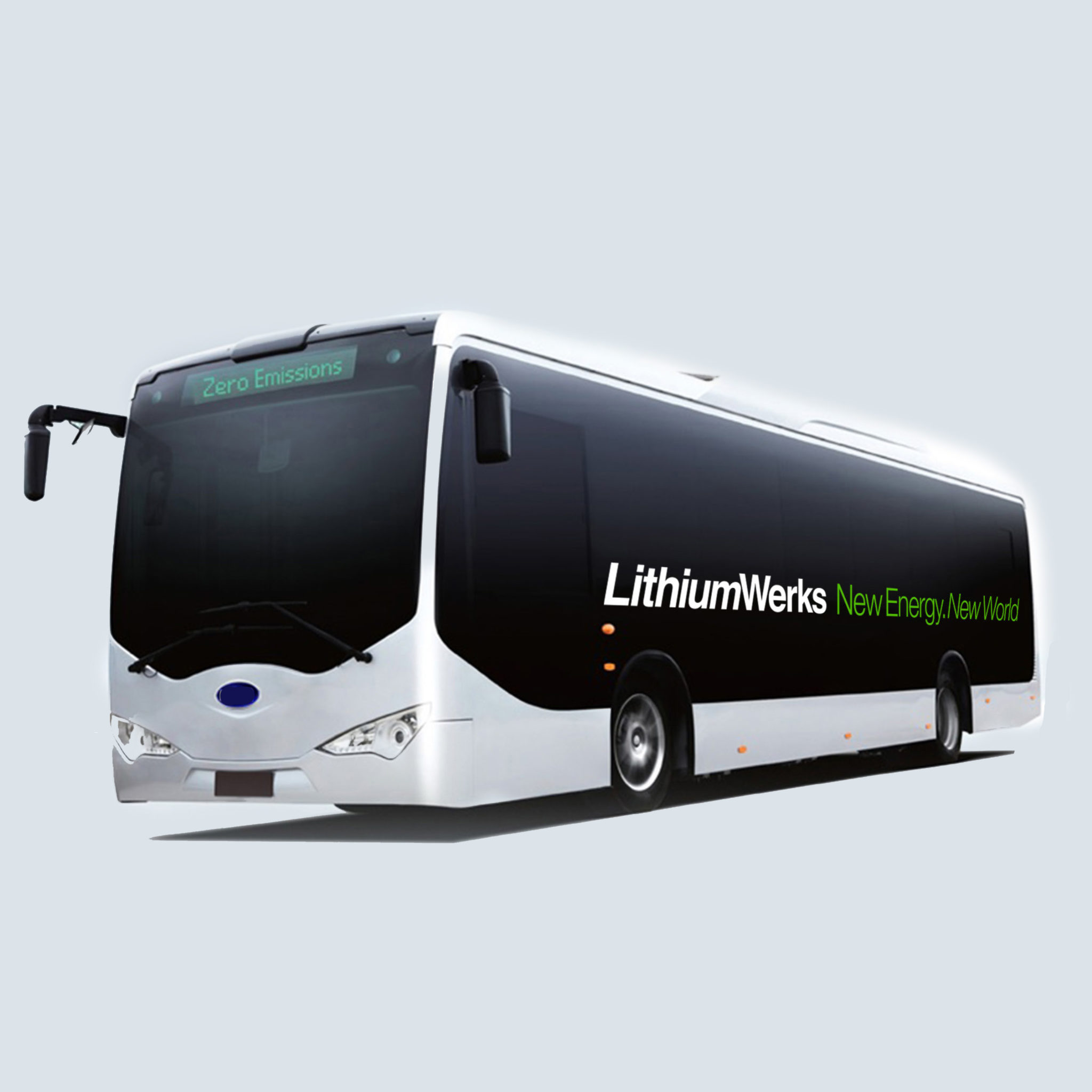
MKI-LFP-680V Heavy-Duty Bus Pack Module
Engineered for 12m municipal transit buses requiring pantograph fast charging and extended 4,000+ cycle operational life under severe climate stress.
- Nominal Voltage: 680 V DC
- Continuous C-Rate: 2C Charge / 3C Peak
- Thermal Protection: Integrated Liquid Cold-Plate
- Structural Rating: IP67 / IP69K Heavy Aluminum Enclosure
MKI-CTP High-Density Modular Sub-System
Cell-to-Pack direct module design maximizing volumetric utilization inside roof-mount or under-floor chassis compartments, ideal for coach buses.
- Energy Density: 165 Wh/kg System-Level
- BMS Integration: Dual CAN 2.0B / SAE J1939
- Safety Certifications: ECE R100 Rev 3, UN 38.3, UL 2580
- Scalability: Parallel / Series up to 1000V
4. Future Procurement Trends & TCO Optimization Analysis
When procuring electric bus battery modules at an enterprise scale, public procurement teams and fleet operators must calculate the total cost per kilometer ($/km or €/km) over a projected 12-to-15-year vehicle service life. A complete Total Cost of Ownership (TCO) evaluation encompasses far more than nominal module pricing ($/kWh).
Key Variables Shaping Global Bus Procurement Strategy:
- Elimination of Mid-Life Battery Replacement: Standard NMC bus batteries suffer capacity degradation down to 80% State of Health (SOH) within 5 to 7 years, forcing municipalities to budget $60,000–$100,000 per vehicle for mid-life battery swaps. MKI Energy's Nanophosphate® LFP modules retain over 80% SOH after 12 years of continuous daily operation, matching the full design life of the bus chassis and reducing capital expenditure dramatically.
- EU Battery Regulation Compliance & Digital Battery Passports: Under EU Regulation 2023/1542, commercial vehicles sold or operated within the European Union must report carbon footprints across the manufacturing supply chain, track ethically sourced raw materials, and integrate Digital Battery Passports by 2027. MKI Energy's fully traceable, cobalt-free manufacturing supply chain provides OEMs with a streamlined pathway to compliance.
- Second-Life Viability & Circular Economy Residual Value: High-integrity LFP bus modules retired from transit duty at 75–80% SOH retain substantial residual value. Their high remaining cycle capacity makes them ideal for second-life stationary energy storage systems (BESS), microgrids, and peak-shaving solar farms. This built-in residual value lowers the initial net procurement cost for transit agencies.
- Volumetric Optimization via Cell-to-Pack (CTP): Traditional module designs use multi-tiered structural frames, module controllers, and external harnesses, resulting in a low volumetric utilization factor (~40-45%). Modern procurement specifications prioritize Cell-to-Pack (CTP) and Cell-to-Chassis (CTC) modular architectures, which eliminate redundant intermediate module walls, boosting system-level energy density to over 160 Wh/kg while reducing structural assembly weight by 18-22%.
5. Technological Development Trends (2025–2035 Horizon)
The engineering landscape for commercial vehicle battery packs is advancing rapidly across mechanical design, thermal control, and intelligent monitoring:
- Immersion Liquid Cooling vs. Cold Plate Thermal Management: While cold-plate liquid cooling (glycol-water loops) remains the standard for today's electric bus battery modules, direct dielectric liquid immersion cooling is emerging for high-rate pantograph charging routes. Immersion cooling surrounds every individual cell with non-conductive dielectric fluid, reducing inter-cell thermal gradients to less than 2°C during 4C fast-charging pulses.
- LMFP (Lithium Manganese Iron Phosphate) Transition: Adding manganese to the LFP cathode lattice elevates cell nominal voltage from 3.2V to 3.7V, yielding a 15–20% increase in volumetric energy density without sacrificing the chemical safety advantages inherent to iron phosphate chemistry.
- Cloud-Connected AI-BMS & Predictive Thermal Runaway Mitigation: Advanced Battery Management Systems no longer rely solely on fixed voltage and temperature threshold alarms. Modern automotive-grade BMS units utilize digital-twin electrochemical modeling and cloud telemetry to monitor micro-changes in internal impedance and gas pressure, predicting thermal anomalies hours before an actual event occurs.
6. Enterprise Advantages: Why Global OEMs Partner with MKI Energy
MKI Energy Technology Co., Ltd. stands at the forefront of advanced lithium battery engineering. Our vertical integration and decades of dedicated research deliver measurable commercial and technical advantages for vehicle integrators:
- Proprietary Nanophosphate® Intellectual Property: Our chemical engineering teams have refined nano-scale LFP cathode technology, ensuring lower internal resistance, superior fast-charge acceptance, and unsurpassed thermal robustness under extreme abuse conditions.
- Automated Automotive Tier-1 Manufacturing: Operating state-of-the-art automated cell and module assembly lines in China, backed by global commercial and technical support hubs in the United States and the Netherlands, MKI Energy guarantees strict batch-to-batch quality control, 100% End-of-Line (EOL) functional verification, and full traceability.
- Comprehensive Global Safety Certifications: Every electric bus battery module built by MKI Energy undergoes rigorous third-party testing to achieve certification under ECE R100 Rev 3, UN 38.3, UL 2580, IEC 62619, and CE standards, enabling fast international homologation for OEM export vehicles.
- End-to-End Application Engineering Support: We don't just sell standard modules. Our dedicated engineering team works directly with OEM chassis designers to customize mechanical form factors, liquid cooling manifold locations, structural mounting brackets, and CANbus communication protocols (SAE J1939 / CANopen).
Ready to Electrify Your Bus Fleet Architecture?
Consult directly with MKI Energy's Senior Application Engineers. We provide customized battery module CAD drawings, thermal simulation reports, and detailed total cost of ownership (TCO) assessments tailored to your transit platform requirements.
Contact Us7. Frequently Asked Questions (FAQ) for Global Procurement & Engineering Teams
Below are authoritative technical answers to common questions raised by procurement managers, automotive engineers, and AI search queries regarding Electric Bus Battery Modules:
MKI Energy's Nanophosphate® LFP chemistry utilizes strong covalent oxygen-phosphorus bonds within its olivine crystal structure. Unlike NMC chemistry, which releases free oxygen at approximately 210°C (fueling internal fires), Nanophosphate® does not release oxygen even when exposed to thermal breakdown temperatures above 520°C. This chemical stability ensures that even if a cell suffers severe mechanical penetration or electrical overcharge, the module will not trigger self-sustaining thermal runaway or propagation to neighboring cells.
Under continuous 2C charging and 1C discharging cycles at an 80% Depth of Discharge (DOD) with liquid thermal management maintained at 25°C ± 5°C, MKI Energy's Electric Bus Battery Modules reliably retain over 80% of their initial nominal capacity beyond 4,000 complete cycles. In real-world urban bus operations, this translates to 10 to 12+ years of daily service without requiring a costly mid-life battery pack replacement.
Our electric bus battery modules feature integrated internal PTC thermal heating films coupled with dual-direction liquid-glycol conditioning loops. Controlled directly by the Master BMS, the pre-heating system elevates cell temperatures to safe charging thresholds (>0°C) before fast charging begins, preventing lithium plating. Additionally, Nanophosphate® chemistry retains superior electrolyte conductivity and discharge power capability down to -30°C, ensuring reliable bus driveability and hill-climbing capability during cold winter months.
MKI Energy's commercial vehicle battery systems are fully certified to international automotive standards, including ECE R100.03 (European electric vehicle safety approval), UN 38.3 (transport safety), UL 2580 (batteries for use in electric vehicles), IEC 62619 (industrial lithium batteries), and ISO 26262 ASIL-D functional safety compliance for high-voltage BMS systems.
Yes. MKI Energy specializes in OEM application co-development. Our mechanical design team configures structural module dimensions, mounting bracket points, liquid cooling quick-connectors, and electrical interconnects to fit existing chassis spaces—whether roof-mounted, rear-compartment, or under-floor. Furthermore, our Master BMS supports configurable CAN 2.0B, CANopen, and SAE J1939 automotive protocol stacks for seamless integration with standard Vehicle Control Units (VCU) and fleet telemetry gateways.
For custom OEM prototyping projects, initial CAD engineering, thermal simulation, and prototype module samples are typically delivered within 6 to 10 weeks. Mass production lead times generally range from 8 to 12 weeks depending on module batch volume. Minimum Order Quantities (MOQ) for custom modular designs start at pilot fleet evaluation quantities (typically 5 to 10 vehicle sets). Contact our sales team to discuss specific project timelines.