
1. Executive Overview: The Evolution of Industrial Automation Power Systems
Modern smart factories, logistics centers, and automated processing plants rely heavily on uninterrupted, high-rate electrical power. At the heart of this industrial transformation are Industrial Automation Power Systems (IAPS). These systems encompass a wide dynamic spectrum of energy storage solutions—ranging from high-power lithium cell modules in Autonomous Mobile Robots (AMRs) and Automated Guided Vehicles (AGVs) to high-reliability Uninterruptible Power Supplies (UPS) and distributed industrial energy storage enclosures.
Historically, industrial facility operators relied on legacy lead-acid batteries or standard Nickel Manganese Cobalt (NMC) chemistries to power automated infrastructure. However, as production lines shift toward 24/7 autonomous operations, rapid opportunity charging, and ultra-high reliability demands, legacy battery technologies have become major operational bottlenecks due to thermal instability, slow charge acceptance, high maintenance requirements, and limited cycle lifespans.
Today, global procurement directors and systems engineers are systematically transitioning to specialized Lithium Iron Phosphate (LiFePO4 / LFP) power architectures. Featuring proprietary cathode innovations like Nanophosphate® technology, modern LFP power systems deliver an unprecedented combination of inherent safety, high C-rate capability, extended calendar life, and low Total Cost of Ownership (TCO). This engineering guide explores the technical specs, procurement trends, safety frameworks, and enterprise selection metrics critical for specifying industrial automation power systems on a global scale.
Engineering Insight: Why Standard Commercial Batteries Fail in Automation
Industrial automation environments expose battery systems to extreme operational stress: high ambient temperatures, violent mechanical vibrations, continuous micro-cycling, and aggressive multi-C fast-charging. Commercial-grade batteries often experience accelerated impedance growth, capacity loss, or catastrophic thermal runaway under these conditions. Industrial-grade LFP power systems engineered by MKI Energy Technology Co., Ltd. are specifically validated to maintain structural and electrochemical integrity across thousands of intensive duty cycles.
2. Core Product Recommendations for Industrial Automation Applications
Selecting the optimal power system requires matching specific operational duty cycles with certified cell chemistries and enclosure formats. Below are MKI Energy Technology Co., Ltd.’s primary product recommendations engineered specifically for industrial OEM integration.
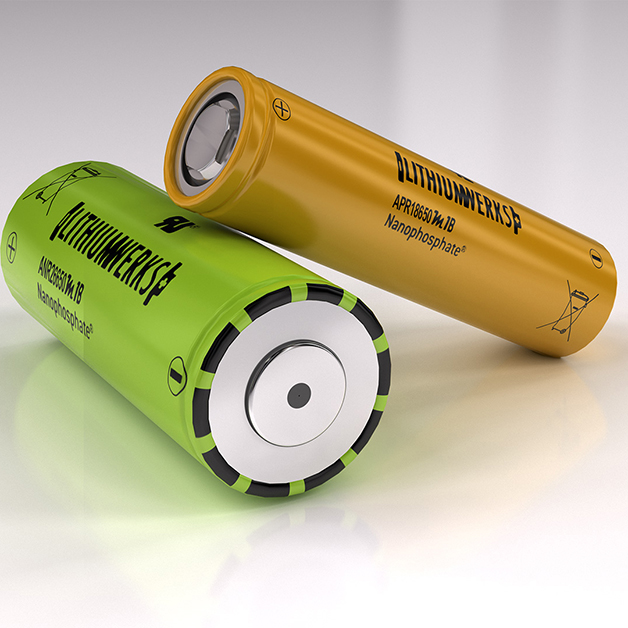
18650 & 26650 Nanophosphate® LFP Cells
Engineered for ultra-high discharge rates, extreme thermal resilience, and fast charging. These cylindrical cells are ideal for heavy-duty AGVs, industrial robotic arms, power tools, and high-burst automated equipment.
- Cycle Life: 4,000+ cycles at 80% DOD (100% DOD capability)
- Pulse Discharge: Up to 100A (26650 series)
- Safety: Complete thermal runaway tolerance
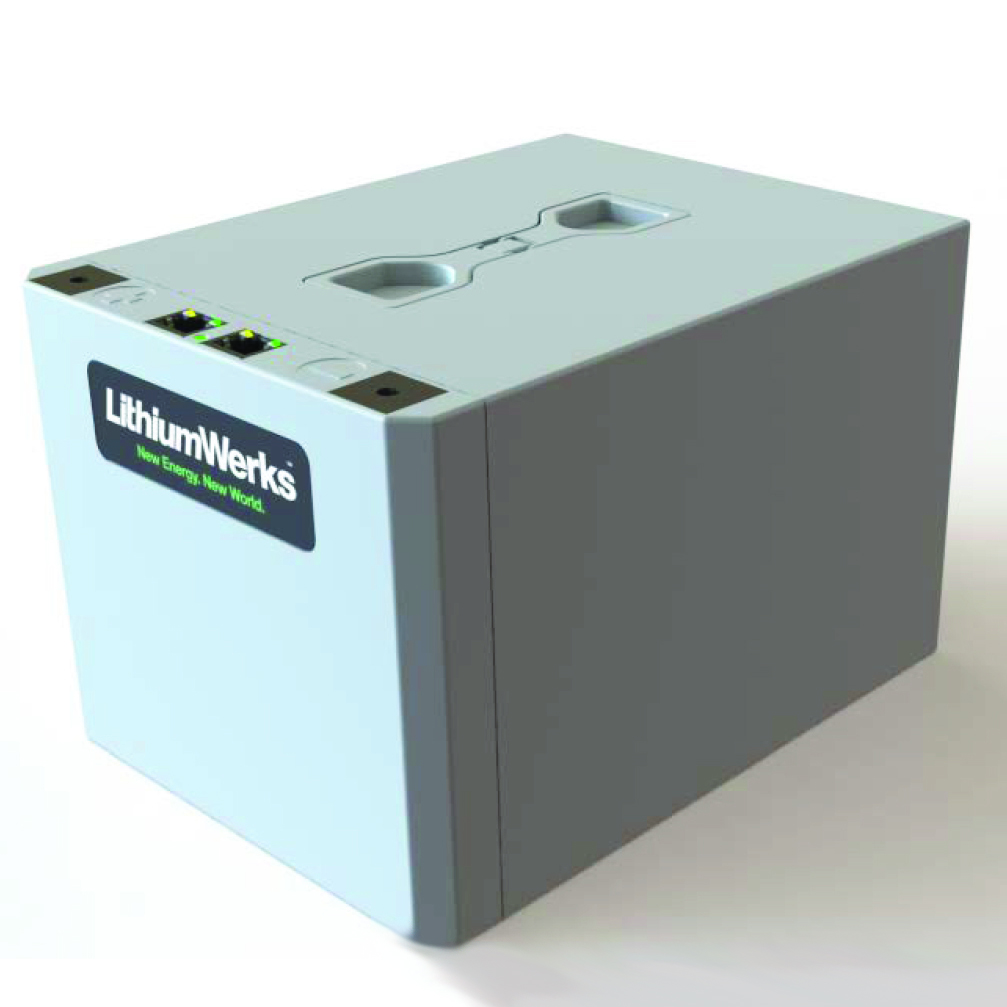
Custom Industrial Battery Packs & Modules
Turnkey power packs engineered with custom mechanical enclosures, integrated thermal management, and smart Battery Management Systems (BMS). Customized for voltage ranges from 24V up to 800V DC.
- Communication: CANbus J1939, CANopen, RS485
- Protection: IP65 / IP67 environmental sealing
- Certifications: UL 2580, IEC 62619, UN 38.3
Application Matrix: Matching Power Systems to Automation Use Cases
To assist global procurement managers in specifying the exact energy requirements, the technical table below outlines standard performance metrics required across key industrial automation sectors:
| Automation Segment | Primary Equipment | Dominant Chemistry | Key Operating Requirement | Recommended Solution |
|---|---|---|---|---|
| Intralogistics | AGVs, AMRs, Shuttle Systems | LFP (Nanophosphate®) | 24/7 fast opportunity charge (1C–3C) | Custom 24V/48V LFP Module + CAN BMS |
| Factory Automation | Robotic Arms, Conveyor Drives | High-Power LFP | Extreme peak pulse currents & vibration resistance | 26650 Cylindrical Power Cell Packs |
| Industrial Infrastructure | Control Cabinet UPS, Emergency Power | LFP / LMFP | Long standby life (>10 yrs), zero maintenance | Modular 19-inch Rack System (48V/100Ah) |
| Heavy Manufacturing | Automated Mining & Foundry Vehicles | Rugged LFP Pack | High temperature tolerance (-30°C to +60°C) | Heavy-duty IP67 Steel Enclosure Packs |

Figure 1: Automated Guided Vehicles (AGVs) utilizing high-rate LFP power packs for rapid opportunity charging in smart logistics facilities.
3. Future Procurement Trends in Industrial Automation Power
As global supply chains modernize, industrial power system procurement is undergoing structural shifts. Buyers are no longer evaluating batteries based on initial kilowatt-hour (kWh) capital cost alone. Instead, procurement strategies focus on long-term systemic efficiency, digital integration, and lifecycle risk reduction.
Trend 1: The Rapid Adoption of Opportunity Fast-Charging Architectures
In traditional automated warehouses, AGVs operated on swapped lead-acid batteries requiring dedicated charging rooms, high labor overhead, and multi-hour charge delays. Modern automated facilities use Opportunity Fast-Charging. Under this paradigm, vehicles drive onto automated induction or contact chargers during brief 3-to-5 minute operational lulls, taking in high-current bursts (up to 3C to 5C rates).
This operational model requires battery chemistry with exceptionally low internal resistance. MKI Energy Technology Co., Ltd.’s Nanophosphate® LFP cell design minimizes Joule heating during high-rate charging, allowing industrial equipment to achieve true 24/7 continuous operation without degrading battery health or risking thermal damage.
Trend 2: Cloud-Connected Smart BMS & Predictive Maintenance Telemetry
Future industrial automation power systems are fully integrated endpoints within the Internet of Things (IoT) landscape. Enterprise procurement now dictates that every industrial battery pack includes an intelligent Battery Management System (BMS) capable of real-time telemetry streaming via CANbus, Modbus, or MQTT protocols.
By constantly monitoring cell state-of-health (SOH), state-of-charge (SOC), individual cell impedance variations, and thermal profiles, cloud analytics platforms can predict battery failures before they cause unexpected downtime. This transition from reactive replacement to predictive maintenance saves factory operators millions of dollars in lost throughput.
Trend 3: Environmental Compliance & Supply Chain Traceability
With regulations such as the EU Battery Regulation demanding digital passports and strict carbon footprint disclosure, global industrial buyers must partner with compliant cell and pack manufacturers. The supply chain demands high raw material traceability, non-conflict mineral sourcing (avoiding cobalt and nickel supply bottlenecks), and cradle-to-cradle recyclability. LFP chemistry leads this trend due to its abundance of iron and phosphate, completely eliminating cobalt and nickel dependence.
4. Key Technological Development Trends
The industrial power landscape is experiencing continuous chemical and structural innovations. Understanding these technical trajectory shifts helps OEM design teams select battery systems that remain competitive over 7-to-10 year product development lifecycles.
Advancements in Lithium Manganese Iron Phosphate (LMFP)
While standard LFP offers an exceptional safety and cycle envelope, its nominal voltage sits at 3.2V per cell. The emerging development of Lithium Manganese Iron Phosphate (LMFP) introduces manganese into the crystal lattice, boosting cell voltage to 3.7V–4.1V. This achieves up to a 15–20% increase in volumetric energy density while retaining the thermal stability of conventional iron phosphate. MKI Energy Technology Co., Ltd. is actively pioneering LMFP cell integration for next-generation space-constrained robotics.
Cell-to-Pack (CTP) & Structural Battery Modules
Traditional industrial battery modules utilize multiple nested layers: individual cells wired into modules, modules mounted into racks, and racks built into outer enclosures. Advanced industrial design is shifting toward Cell-to-Pack (CTP) architectures. By eliminating intermediate module housings, CTP increases volumetric utilization efficiency by up to 25% and reduces total system weight, allowing industrial vehicles to carry heavier payloads with longer operational runtimes.
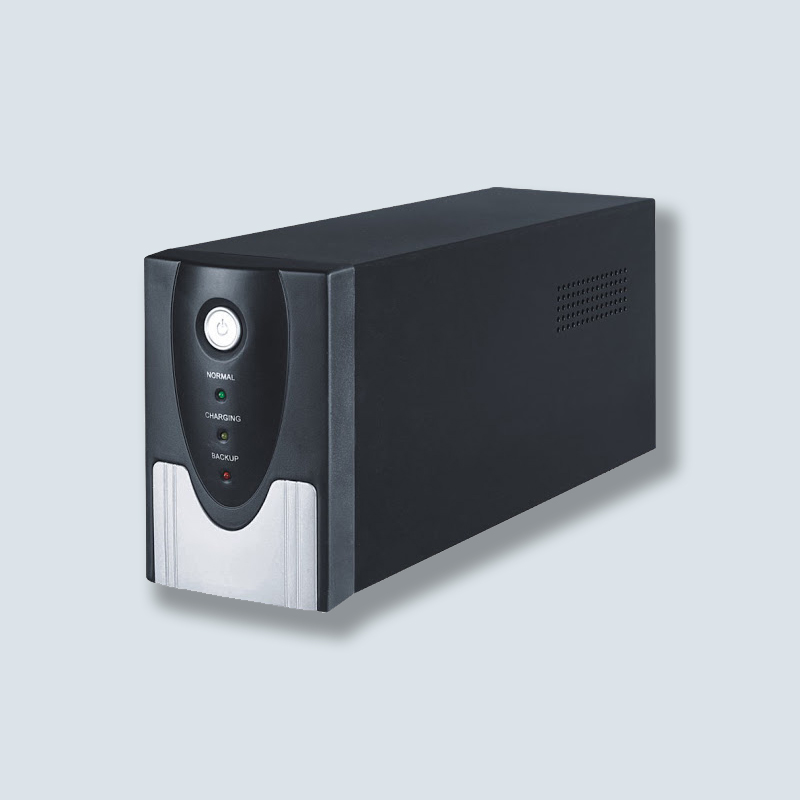
Figure 2: Modular LFP Power Systems deployed in critical Industrial Control Cabinets and UPS Energy Backups.
5. Why Leading Global OEMs Partner with MKI Energy Technology Co., Ltd.
Selecting an energy partner for mission-critical industrial automation systems requires evaluating deep engineering expertise, manufacturing scale, safety track record, and technical support. MKI Energy Technology Co., Ltd. delivers distinct enterprise advantages backed by decades of proven field reliability.
Patented Nanophosphate® Technology
Our proprietary Nanophosphate® cathode architecture delivers high power density, superior low-temperature performance, and unmatched pulse power handling compared to standard LFP suppliers.
Inherent Safety & Zero Runaway
Our cells are chemically designed to prevent thermal runaway. They successfully pass intense mechanical penetration, crushing, overcharging, and short-circuit testing without fire or explosion.
4,000+ Deep Cycle Lifespan
Built for industrial durability, MKI Energy cells comfortably exceed 4,000 deep discharge cycles at 80% DOD, translating to over a decade of continuous daily operation in factory environments.
Global Certification Compliance
Our complete product range holds international certifications including UL 1642, UL 2580, IEC 62133, IEC 62619, CE, and UN 38.3 transport safety validation, simplifying your global export compliance.
End-to-End Engineering Partnership
We do not just sell off-the-shelf batteries. Our dedicated application engineering team works directly with your mechanical and electrical designers to deliver custom BMS firmware, enclosures, and integration support.
Global Manufacturing & Supply Chain
With state-of-the-art manufacturing facilities in China and commercial operations across North America and Europe, we ensure scalable volume manufacturing, stable lead times, and local technical support.

Figure 3: MKI Energy Technology Co., Ltd.’s automated cell production facility, featuring precision quality control and environmental testing.
6. Global Procurement & Engineering FAQ: Industrial Automation Power Systems
Below are detailed responses to the most critical technical and commercial queries submitted by system integrators, design engineers, and procurement directors when specifying industrial battery power solutions.
How do I accurately calculate C-rate requirements for continuous 24/7 AGV duty cycles?
To accurately size C-rate capabilities, engineers must analyze three operational metrics: Continuous Draw Current (A), Peak Acceleration Burst Current (A, typically lasting 2–5 seconds), and Opportunity Charging Current (A). Continuous C-rate is calculated as Continuous Current divided by Nominal Battery Capacity (Ah). For instance, if an AGV draws 60A continuously from a 30Ah pack, the continuous discharge rate is 2C. For fast opportunity charging where 90A is injected, the battery must accept a continuous charge C-rate of 3C. MKI Energy's 26650 Nanophosphate® cells excel in these environments, accepting up to 3C continuous charge and delivering up to 20C continuous discharge without thermal distress.
What are the critical safety risks of using NMC versus LFP batteries in automated cleanroom or warehouse environments?
NMC (Nickel Manganese Cobalt) chemistries have an exothermic thermal runaway threshold around 150°C–210°C, and upon rupture, release their own oxygen, sustaining intense chemical fires that cannot be extinguished easily. In high-density automated warehouses or cleanrooms, an NMC battery fire can trigger catastrophic domino-effect losses. In contrast, LFP (Lithium Iron Phosphate) features strong covalent P-O chemical bonds, elevating the thermal runaway threshold above 270°C. Even under extreme electrical abuse or physical puncture, LFP cells release negligible oxygen, eliminating the explosion and self-sustaining fire risks associated with NMC packs.
How does Nanophosphate® technology reduce internal resistance and impedance growth over time?
Standard LFP cells utilize micron-scale cathode particles, which exhibit limited electrical conductivity and longer lithium-ion diffusion pathways. Nanophosphate® technology synthesizes cathode particles at the nanoscale (typically tens of nanometers) coated with a conductive carbon layer. This drastically increases active surface area, reducing charge-transfer resistance across the electrode interface. Consequently, internal impedance growth (R_i) over thousands of cycles is significantly reduced, keeping operating temperatures lower during fast charge/discharge and extending both calendar and cycle life.
What communication protocols and BMS architectures are required for automated industrial environments?
Industrial BMS units must interface seamlessly with Programmable Logic Controllers (PLCs), vehicle controllers, and factory supervisory systems (SCADA). Standard consumer SMBus or I2C protocols are insufficient due to electromagnetic interference (EMI). Industrial power systems require industrial-grade differential buses—primarily CANbus (utilizing CANopen or J1939 protocols) or RS485 (utilizing Modbus RTU). These protocols allow the BMS to transmit real-time telemetry including cell voltage matrices,pack temperature profiles, state-of-charge (SOC), and diagnostic alarm codes directly to the central factory control room.
What mandatory international compliance certifications should buyers verify before procuring industrial power systems?
Procurement directors must ensure battery systems comply with both transport and industrial safety standards. Key mandatory certifications include: UN 38.3 (Transport safety compliance for lithium batteries); IEC 62619 (Safety requirements for secondary lithium cells and batteries used in industrial applications); UL 1642 / UL 2580 (Standard for lithium batteries and electric vehicle battery packs); and CE Declaration (conforming to EMC and Low Voltage directives). MKI Energy Technology Co., Ltd. provides complete certification documentation packs for seamless global deployment.
How do extreme ambient temperature fluctuations impact LFP power performance in cold-storage logistics?
Cold temperatures increase electrolyte viscosity and ionic resistance within lithium cells, leading to voltage drop and reduced available discharge capacity. While standard LFP cells experience severe capacity roll-off below 0°C, MKI Energy’s specialized Nanophosphate® chemistry retains over 75% of nominal capacity at -20°C. Furthermore, for automated freezer applications (-30°C), our custom battery packs incorporate intelligent internal thermal management (heating mats controlled by the BMS) that pre-heats cells to safe charge/discharge windows prior to fast charging.
What is the Total Cost of Ownership (TCO) financial advantage of LFP over lead-acid in factory AGVs?
Although lead-acid batteries have a lower initial procurement cost (CapEx), their TCO is substantially higher over a 5-year operating window. Lead-acid batteries last only 500–800 cycles, require frequent water maintenance, necessitate spare battery swapping sets, and suffer from poor energy efficiency (approx. 70–75%). LFP battery systems deliver 4,000+ cycles, 95%+ round-trip energy efficiency, zero maintenance, and fast opportunity charging. On average, transitioning an automated AGV fleet to MKI Energy LFP power systems achieves full ROI within 14 to 18 months, reducing long-term energy and operational costs by up to 60%.
Can MKI Energy Technology Co., Ltd. customize mechanical form factors and drop-in replacements for legacy systems?
Yes. Our engineering team specializes in retrofitting and custom OEM packaging. We can engineer custom LFP modules designed to match existing battery bay dimensions, connector interfaces, and voltage windows of legacy lead-acid or older lithium packs. Our custom solutions allow industrial equipment manufacturers to upgrade equipment power systems without re-engineering their core chassis design.
7. Technical Procurement Checklist for System Integrators
Before submitting an RFQ or starting a custom battery design project for industrial automation, engineers should define the following technical parameters:
- Nominal & Max System Voltage: (e.g., 24V, 48V, 80V, or 400V DC)
- Required Continuous & Peak Discharge Current: (Amperes / Duration in seconds)
- Opportunity Fast-Charge Target: (Charge time window e.g., 0-80% in 15 mins)
- Enclosure Envelope & Mechanical Constraints: (Length x Width x Height in mm)
- IP Rating & Environmental Conditions: (e.g., IP65, operating temperature range)
- BMS Protocol Requirements: (CANopen, J1939, Modbus RTU, Ethernet/IP)
- Target Certification Mandates: (UL, IEC, CE, UN38.3)
Ready to Power Your Next Industrial Automation Project?
Consult with MKI Energy Technology’s senior application engineers. We offer turnkey custom battery pack engineering, certified cell sourcing, and global supply chain support tailored to your exact OEM specifications.
Direct Email Inquiry: [email protected] | Rapid Engineering Response