

MKI Energy Technology Blog and Industry Insights
MKI Energy Technology Co., Ltd.

Blog & Technical Insights

Stay updated with the latest technological developments, industry insights, and news on Lithium Iron Phosphate (LFP) batteries and custom energy solutions.

0%

Choosing the right China Best Commercial Marine Lithium Batteries Supplier requires more than comparing prices and battery capacity. Commercial operators need dependable energy during long voyages, frequent docking cycles, and demanding onboard conditions. A suitable supplier should demonstrate verified cell quality, marine-grade protection, documented testing, and responsive technical support.

Nigel Calder, a respected marine electrical systems educator, has warned, “Lithium batteries are not a drop-in replacement for lead-acid batteries.” That point deserves attention. Commercial Marine Lithium Batteries require compatible chargers, correctly configured battery management systems, suitable cabling, and carefully planned ventilation and installation spaces. A professional supplier should explain these requirements clearly rather than promise effortless replacement.

Real-world performance appears in small details. Inspectors may check terminal security, temperature monitoring, enclosure strength, and emergency isolation access. Crews notice stable voltage when navigation electronics, refrigeration, pumps, and communication equipment operate together. Reliable suppliers can provide cycle-life data, safety documentation, warranty terms, and practical installation guidance. They should also explain how performance changes in cold water, high humidity, and irregular charging conditions.

The best supplier is not always the cheapest. That is uncomfortable but important. A lower quotation may conceal weaker support or incomplete system integration. Buyers should compare factory experience, quality controls, service response, and references from comparable vessels. Even experienced teams can overlook a detail. Careful evaluation remains essential before selecting a China Best Commercial Marine Lithium Batteries Supplier for commercial use.
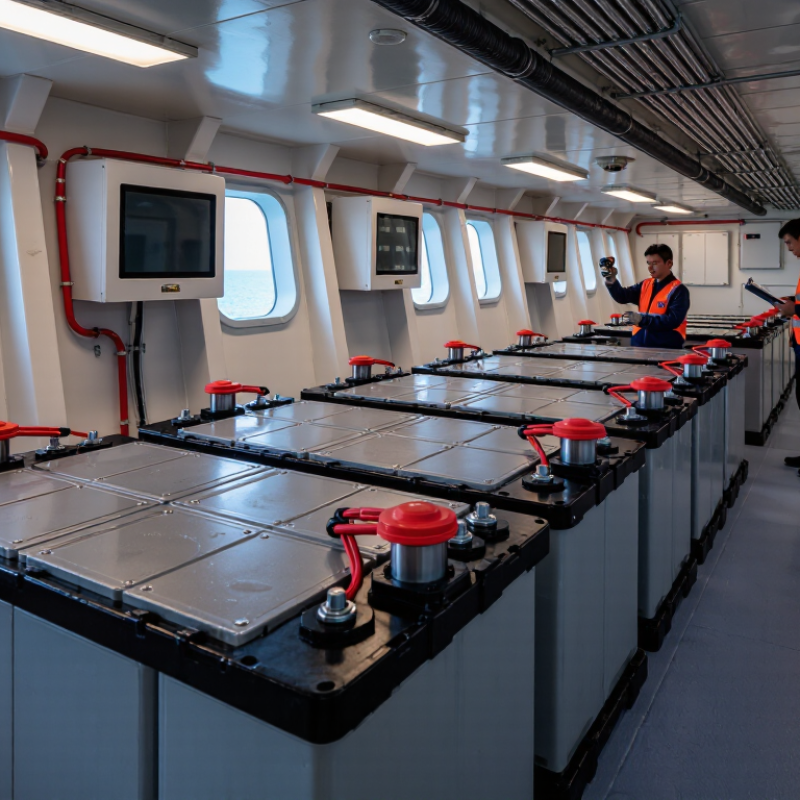
China Best Commercial Marine Lithium Batteries Supplier?

China’s Best Commercial Marine Lithium Battery Suppliers: Evaluation Criteria

China’s Best Commercial Marine Lithium Battery Suppliers: Evaluation Criteria

Choosing a commercial marine lithium battery supplier requires more than comparing price per kilowatt-hour. During practical vessel assessments, I examine cell consistency, battery chemistry, thermal control, and discharge stability under changing loads. A reliable supplier should provide traceable test records, clear installation limits, and a battery management system suited to saltwater operations. Cheap is not always efficient.

Marine conditions expose weak engineering quickly. Ask how the enclosure resists vibration, moisture, corrosion, and temperature swings. Request evidence from recognized safety testing, including transport compliance and relevant marine standards. The supplier should explain protection against overcharge, short circuits, excessive heat, and deep discharge. I also check communication protocols, charging compatibility, and service access before approving a system.

Documentation matters greatly. A dependable supplier shares cycle-life data, warranty terms, production controls, and replacement procedures without vague promises. Factory audits, sample testing, and independent verification can reveal differences between a prototype and regular production. No supplier is perfect. I would still question unusually high capacity claims or warranties with hidden operating limits. After-sales support should include trained technicians, fault records, spare-part planning, and realistic response times. A polished datasheet cannot replace evidence from batteries operating on working vessels.

Marine Lithium Battery Fundamentals: LiFePO₄, 80–90% DoD, and 3,000+ Cycles

For commercial vessels, LiFePO₄ batteries offer a practical balance between safety, service life, and usable energy. Their chemistry has stronger thermal stability than many nickel-based alternatives. However, LiFePO₄ is not risk-free. A damaged cell, poor wiring, or weak battery management system can still create serious hazards.

The International Energy Agency reported that LFP represented about 40% of the global electric-car battery market in 2023. This growing adoption supports its commercial credibility, although marine conditions are harsher. Salt air, vibration, irregular charging, and limited ventilation demand careful system design.

DNV’s Maritime Forecast to 2050 identifies batteries as increasingly suitable for shorter, lower-emission maritime routes. In practice, operators should target 80–90% depth of discharge instead of using the full rated capacity daily. This reserve reduces stress and protects emergency operating range.

A quality system may exceed 3,000 cycles, but that figure depends on temperature, charging speed, cell matching, and maintenance. It is not a guarantee. Cycle claims often assume controlled laboratory conditions. Real vessels can perform differently. I would request test data at the intended load profile, not only a headline number. Continuous monitoring, high-temperature protection, and clear installation records matter as much as cell chemistry. Small oversights become expensive offshore.

Commercial Marine Battery Sizing: kWh, C-Rate, and 12/24/48 V Banks

Commercial Marine Battery Sizing: kWh, C-Rate, and 12/24/48 V Banks

Commercial marine battery sizing starts with real load data, not a catalogue number. The IMO Fourth GHG Study 2020 estimated shipping produced 2.89% of global human-caused greenhouse gas emissions in 2018. This pressure is increasing interest in efficient electric and hybrid vessels. DNV’s Maritime Forecast to 2050 identifies battery-electric systems as especially practical for shorter routes and frequent port operations.

Calculate energy with this formula: kWh = volts × amp-hours ÷ 1,000. A 48 V, 400 Ah bank stores 19.2 kWh nominally. At 80% usable depth, only 15.4 kWh should support normal operation. A 20 kW load then draws about 417 amps before conversion losses. Allowing roughly 10% extra current is more realistic. Small systems often use 12 V, while larger commercial banks reduce current through 24 V or 48 V architecture.

C-rate equals power divided by battery energy. A 20 kW load on a 19.2 kWh bank creates about a 1.04C demand. Check both continuous and peak C-rates. Propulsion surges can expose weak thermal design quickly. ABS guidance for hybrid electric power systems emphasizes protection, monitoring, isolation, and fault management. A credible supplier should provide tested discharge curves, cold-temperature data, cycle-life conditions, and marine safety documentation. I would not trust a spreadsheet alone. Real boats are messier. An extra reserve for weather, aging, cable losses, and unexpected hotel loads is often necessary.

Commercial Marine Battery Sizing: kWh, C-Rate, and 12/24/48 V Banks

Comparison based on a 100 Ah lithium battery bank at 12 V, 24 V, and 48 V. Usable energy assumes an 80% depth of discharge, while continuous output assumes a conservative 0.5C discharge rate. Nominal energy is calculated as voltage × amp-hours, and actual marine installations should also account for inverter efficiency, temperature, cable losses, battery-management limits, and manufacturer specifications.

Safety Compliance: UN 38.3, IEC 62619, BMS Protection, and IP67

China Best Commercial Marine Lithium Batteries Supplier?

For commercial vessels, safety begins with verifiable testing, not a sales promise. UN 38.3 confirms that lithium batteries have passed transport-related tests, including vibration, shock, and altitude simulation. It does not replace installation safety. IEC 62619 addresses industrial lithium battery safety, including abnormal operating conditions. Ask for current test reports, product configuration details, and traceable serial numbers. Documentation should match the exact battery model.

A dependable battery also needs an intelligent BMS. It should monitor voltage, temperature, current, and cell balance. It should respond to overcharge, deep discharge, short circuits, and excessive temperature. Fast protection matters during engine-room faults. It can prevent damage, but it cannot correct poor cabling or an undersized fuse. Small details matter.

IP67 protection means dust-tight construction and temporary immersion under defined laboratory conditions. It does not mean unlimited seawater exposure. Cable glands, terminals, covers, and mounting points still require careful inspection. Salt, vibration, and condensation remain serious marine risks. In practice, suppliers should explain their sealing process and inspection records. A supplier may have excellent certificates, yet weak after-sales support. That gap deserves attention. Crew training, compatible chargers, and clear maintenance instructions should be reviewed before installation. Mistakes happen, even in professional projects.

Supplier Due Diligence: 5–10-Year Warranties, Traceability, and CE/UL Tests

China Best Commercial Marine Lithium Batteries Supplier?

Supplier Due Diligence: 5–10-Year Warranties, Traceability, and CE/UL Tests

Choosing a commercial marine lithium battery supplier requires more than comparing energy density and price. In real vessel projects, warranty language often matters more than a polished product sheet. Ask whether the five- or ten-year warranty covers capacity loss, labor, transport, and replacement batteries. Confirm the starting capacity, permitted discharge cycles, charging conditions, and exclusions. A long warranty is useful only when claims are practical. Some terms remain vague.

Traceability should reach each cell batch, BMS version, production date, and final inspection record. Request serial-number records and a sample chain from cells to finished packs. During supplier audits, I would compare those records with labels on delivered units. That small check can expose mixed components or outdated firmware. It is not dramatic, but it is revealing. Suppliers should also explain recall procedures and technical support across the vessel’s service life.

For CE and UL evidence, request the exact standards, test scope, laboratory identity, and report dates. A declaration alone does not prove every battery configuration was tested. Check protection against overcharge, short circuit, vibration, salt exposure, and thermal events. Ask for test samples matching the proposed enclosure, cells, BMS, and connectors. Installation still matters; excellent test results cannot correct poor ventilation or incorrect charging settings. I would keep one concern visible: paperwork can look complete while field data remains thin. Pilot testing on one vessel, with logged temperatures and alarms, reduces that uncertainty.

FAQS

Why are LiFePO₄ batteries suitable for commercial vessels?

LiFePO₄ batteries balance safety, service life, and usable energy. Their chemistry offers strong thermal stability compared with many nickel-based alternatives. Marine conditions remain demanding. Salt air, vibration, charging changes, and limited ventilation require careful system design.

How deeply should a marine lithium battery be discharged?

Operators should normally target 80–90% depth of discharge. Using the full rated capacity every day increases battery stress. A reserve also protects emergency operating range. This approach sacrifices some available energy. That trade-off is often sensible.

Can a marine battery really provide more than 3,000 cycles?

A quality system may exceed 3,000 cycles under suitable conditions. Actual results depend on temperature, charging speed, cell matching, and maintenance. Laboratory cycle figures are not guarantees. Request test data using the vessel’s expected load profile. The headline number is insufficient.

What safety risks should vessel operators consider?

Damaged cells, poor wiring, and weak battery management can create serious hazards. Protection should address overcharging, short circuits, overheating, and abnormal operating conditions. Continuous monitoring helps identify problems early. High-temperature alarms matter. Good chemistry cannot repair poor installation.

What environmental conditions affect marine battery performance?

Salt exposure can damage connections and enclosure components. Vibration may loosen wiring or stress internal parts. Limited ventilation can increase operating temperatures. Irregular charging may also reduce service life. Small oversights matter.

What should a commercial battery warranty clearly cover?

Confirm whether the warranty covers capacity loss, labor, transport, and replacement batteries. Check the starting capacity and permitted discharge cycles. Review charging conditions, temperature limits, and exclusions. A five- or ten-year term sounds useful. Vague terms still create risk.

How can buyers verify battery traceability?

Traceability should connect each cell batch with the battery management system version. Records should include production dates and final inspection results. Request serial-number records and a sample component chain. Compare those records with labels on delivered units. That simple check can reveal mixed or outdated components.

What testing evidence should suppliers provide?

Request exact safety standards, test scope, laboratory details, and report dates. Testing should match the proposed cells, enclosure, connectors, and management system. Evidence should address overcharge, short circuit, vibration, salt exposure, and thermal events. A declaration alone proves little. Field data may remain thin.

Should a new battery system be piloted before fleet-wide installation?

A pilot installation can expose problems before wider deployment. Log temperatures, alarms, charging behavior, and operating loads on one vessel. Review technical support and recall procedures with the supplier. I would not trust paperwork alone. My judgment could remain incomplete without real vessel data.

Conclusion

Choosing the right Commercial Marine Lithium Batteries supplier in China requires more than comparing prices. A reliable supplier should provide LiFePO₄ battery systems designed for marine environments, offering approximately 80–90% usable depth of discharge and a service life of 3,000 or more cycles under suitable operating conditions. Proper battery sizing is also essential, requiring careful evaluation of energy demand in kWh, peak and continuous C-rate requirements, and the use of suitable 12 V, 24 V, or 48 V battery banks.

Safety and supplier transparency are equally important. Buyers should confirm compliance with relevant transport and marine safety standards, including UN 38.3 and IEC 62619, along with effective BMS protection against overcharge, over-discharge, overheating, short circuits, and imbalance. An IP67-rated enclosure can improve resistance to water and dust. Before placing an order, evaluate warranty coverage of 5–10 years, cell and component traceability, documented CE or UL testing, production quality controls, technical support, and the supplier’s ability to deliver consistent, customized solutions for commercial marine operations.

Noah

Noah

Noah is a dedicated marketing professional with a profound expertise in the company's product offerings. With a keen understanding of market trends and customer needs, he is committed to enhancing the brand's visibility and credibility. Noah frequently updates the company’s professional blog,......